



Most cases of sudden tooth pain at night are uncomfortable but stable. Your mind races through worst-case scenarios while you sit there wondering if you should call someone right now or just try to sleep it off.
That worry is understandable, and it deserves a straight answer.
Most cases of sudden tooth pain at night are uncomfortable but stable, meaning you can manage them with home care and see a dentist when the office opens.
A smaller number come with warning signs, like facial swelling, fever, or trouble breathing or swallowing, that call for emergency care right away.
The key is knowing which category your symptoms fall into so you can act with confidence instead of guessing.
Night-time toothache often feels worse than daytime pain because of changes in blood flow and pressure once you lie down.
That doesn’t always mean the underlying problem has gotten worse. It does mean you need a clear way to sort out urgent dental emergency signs from ones that can wait a few hours for urgent dental care.
Key Takeaways
- Facial swelling, fever, breathing trouble, or uncontrolled bleeding call for emergency medical attention, not a wait-and-see approach.
- Lying flat increases blood flow to your head, which is a common reason tooth pain feels sharper and more constant at night.
- Home care like a cold compress and over-the-counter pain relief can ease discomfort temporarily, but only a dentist can treat the actual cause.
How to Decide Whether You Need Help Tonight
Sort your symptoms into three groups: symptoms that need emergency medical care, symptoms that need an emergency dentist, and symptoms that can usually wait until morning.
This kind of triage helps you act fast when it matters and avoid unnecessary panic when it doesn’t.
Call Emergency Services for Breathing, Swallowing, or Rapidly Spreading Swelling
Seek emergency care if you have difficulty breathing, difficulty swallowing, or facial swelling that is spreading quickly.
These signs can point to an infection moving into deeper tissues of the face or neck, which can affect your airway.
This is rare, but when it happens, it moves fast, and a hospital, not a dental office, is the right place to go.
Fever and chills paired with facial swelling are also reasons to seek emergency medical evaluation, especially if the swelling is under your jaw or extending toward your eye.
Swelling combined with breathing or swallowing trouble signals a possible spreading infection that needs immediate intervention.
Contact an Emergency Dentist for Severe Pain, Infection Signs, or Dental Trauma
Call an emergency dentist for severe tooth pain, a suspected dental abscess, or trauma like a knocked-out tooth or a badly broken tooth.
Signs of a dental abscess include localized facial swelling that isn’t spreading fast, a pimple-like bump on the gum, pus, or a persistent bad taste in your mouth.
These point to a dental infection that needs professional drainage and treatment, not just pain relief.
Uncontrolled bleeding after an injury, a tooth that’s been knocked completely out, or pain so severe you can’t eat, sleep, or focus also warrant a same-night or first-thing-in-the-morning call to an emergency dentist.
Many practices keep an on-call line for exactly this reason.
When a Stable Toothache Can Usually Wait Until Morning
A toothache can usually wait until your dentist opens if the pain is mild to moderate, stable, and not paired with swelling, fever, or trauma.
Sensitivity to hot or cold, a dull ache that comes and goes, or discomfort from a lost filling without other symptoms often falls into this category.
Keep monitoring for changes, since a stable ache can shift into something more urgent if new symptoms appear overnight.
What Can Cause Tooth Pain to Start or Worsen at Night?
Night-time tooth pain usually comes down to one of a few causes: decay reaching the tooth’s nerve, a crack or damaged filling, gum infection, sinus pressure, or grinding your teeth in your sleep.
Lying down also changes blood flow in ways that make existing pain feel more intense, even if the tooth itself hasn’t changed.
Why Lying Down Can Intensify a Throbbing Toothache
Lying flat increases blood flow to your head and neck, which raises pressure inside an already inflamed tooth. When you’re upright, gravity helps that pressure drain away.
Once you lie down, blood pools more in the upper body, and a tooth with inflamed or infected tissue inside can throb harder as pressure builds against sensitive nerve endings.
This is well documented in dental health resources, including one explanation noting that decay near the gum line can cause severe pain when lying down because gravity increases blood flow to the head.
It’s also part of why toothaches so often seem to wait until you’re trying to sleep before flaring up.
Tooth Decay, Cavities, and Pulp Inflammation
Untreated tooth decay is one of the most common reasons for sudden or worsening tooth pain.
As a cavity deepens, it can reach the pulp, the soft tissue inside your tooth that contains nerves and blood vessels, causing pulpitis, or pulp inflammation.
Reversible pulpitis causes short, sharp sensitivity that fades once the trigger (like cold water) is removed.
Irreversible pulpitis causes lingering, spontaneous pain, often worse at night, and usually means the nerve is too damaged to heal on its own.
This distinction matters because reversible pulpitis may settle down with a filling, while irreversible pulpitis typically needs root canal treatment.
Cracks, Broken Teeth, and Damaged Restorations
A cracked tooth, fractured tooth, or broken tooth can cause pain that flares unpredictably, especially when chewing or when temperature changes reach the inner tooth.
Cracks aren’t always visible, which makes them tricky to self-diagnose. If you notice pain when biting down or releasing pressure, a crack is a likely suspect.
A lost filling or loose crown exposes the tooth underneath, letting temperature, food, and bacteria reach sensitive layers that are normally protected.
This kind of pain often starts suddenly and gets worse at night because the exposed area is more sensitive to pressure changes.
Gum Problems, Sinus Pressure, and Teeth Grinding
Gum disease and gum infection can cause aching pain around the base of teeth, sometimes with swelling or bleeding gums.
Sinus pressure, especially from a cold or allergies, can mimic tooth pain in your upper back teeth since those roots sit close to the sinus cavities.
Teeth grinding, known clinically as bruxism, often happens during sleep without you realizing it.
The repeated pressure can cause tooth sensitivity and a dull, aching pain that’s worse in the morning or overnight.
What Can You Do for Tooth Pain Until You Are Seen?
Manage nighttime tooth pain with a cold compress, an over-the-counter pain reliever, and by avoiding foods or positions that make it worse.
These steps offer temporary comfort. They don’t treat decay, infection, or a cracked tooth, so you’ll still need a dental visit to address the actual cause.
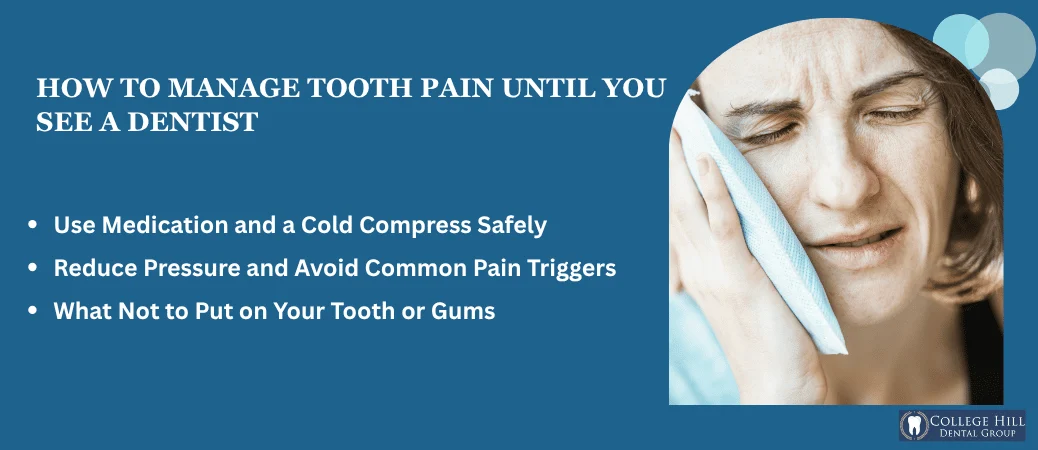
Use Medication and a Cold Compress Safely
A cold compress against your cheek, near the painful tooth, can reduce swelling and dull throbbing pain. Apply it in short intervals of about 15 to 20 minutes rather than holding it in place continuously.
Over-the-counter pain relief with ibuprofen or paracetamol (acetaminophen) can reduce pain and inflammation.
Follow the dosing instructions on the package, and check with a pharmacist if you take other medications or have health conditions that limit which pain reliever you can use safely.
Clove oil, applied sparingly with a cotton swab, is a traditional remedy some people find soothing for temporary numbing, though it isn’t a substitute for treating the underlying problem.
Reduce Pressure and Avoid Common Pain Triggers
Prop yourself up with an extra pillow when you sleep. Keeping your head elevated reduces blood flow pressure to the area and can lessen throbbing pain overnight.
Avoid sugary foods, very hot or cold drinks, and chewing on the affected side. These triggers can irritate an already inflamed or exposed tooth and intensify pain within minutes.
What Not to Put on Your Tooth or Gums
Skip aspirin placed directly on the gum or tooth. It doesn’t numb pain that way and can actually burn and damage gum tissue.
Avoid alcohol-based mouth rinses on an open or sensitive area, and don’t apply heat, since warmth can encourage swelling and worsen a dental infection.
What Happens at an Urgent Dental Visit?
An urgent dental visit starts with a focused dental examination to find the source of your pain, followed by treatment aimed at relieving pain and addressing the cause.
What that treatment looks like depends entirely on what the dentist finds.
How a Dental Examination Identifies the Cause
A professional dental exam usually includes a visual exam, gentle testing of the painful tooth and surrounding teeth, and often an X-ray.
X-rays reveal problems that aren’t visible on the surface, like decay between teeth, a cracked tooth root, or a dental abscess forming below the gum line.
The dentist will also ask about your symptoms, including when the pain started, what makes it better or worse, and whether you’ve noticed swelling, fever, or a bad taste.
When Fillings, Root Canal Treatment, or Other Care May Be Needed
Treatment depends on the diagnosis. A cavity may need a filling. A tooth with irreversible pulp damage may need root canal treatment to remove the infected or inflamed tissue and save the tooth.
A dental abscess needs professional dental treatment to address the source of the infection. Depending on the situation, treatment may involve drainage, root canal treatment, extraction, or antibiotics when appropriate.
If you’ve recently had a tooth removed and pain is worsening a few days later rather than improving, ask about dry socket, a condition where the healing blood clot is lost from the extraction site, exposing bone and nerve endings.
This is treatable but needs prompt attention.
Why Pain That Fades Still Deserves Attention
Pain that suddenly disappears isn’t always good news. With severe pulp damage, fading pain can mean the nerve tissue has died, which sometimes brings temporary relief before an infection develops.
A dentist can tell the difference between a tooth that’s genuinely healing and one that’s masking a bigger problem, which is why follow-up care matters even after the worst of the pain has passed.
Act on Red Flags and Arrange Follow-Up Care
Treat warning signs seriously in the moment, then build habits that lower your risk of another night-time toothache.
Good oral hygiene, twice-daily brushing with fluoride toothpaste, and regular dental check-ups catch small problems like early decay before they turn into pain that wakes you up.
If teeth grinding is part of the picture, a custom night guard can protect your teeth from the pressure of bruxism while you sleep.
Many people don’t realize they grind their teeth until a dentist points out the wear patterns during a routine visit.
Once your immediate pain is treated, schedule a follow-up to address the root cause and prevent repeat episodes of nighttime tooth pain.
Consistent care between emergencies is what keeps a stable mouth stable.
Conclusion
Sudden tooth pain at night feels overwhelming in the moment, but a calm, step-by-step approach helps you respond the right way.
Watch for breathing trouble, spreading swelling, fever, or uncontrolled bleeding, which call for emergency medical care.
Severe pain, signs of infection, or a knocked-out or badly broken tooth call for an emergency dentist, while mild, stable discomfort can usually wait for a morning appointment with the right home care in the meantime.
If the pain persists, worsens, or keeps returning, the team at College Hill Dental Group can evaluate the cause and recommend the right treatment to relieve your discomfort and protect your oral health.
Frequently Asked Questions
Can a toothache that wakes me up wait until morning?
A toothache that wakes you up can often wait until morning if the pain is manageable, stable, and not paired with swelling, fever, or bleeding.
Use a cold compress and an over-the-counter pain reliever to get through the night, then call your dentist first thing. If the pain intensifies quickly or new symptoms appear, seek urgent dental care sooner.
Why does my tooth pain get worse when I lie down?
Lying down increases blood flow to your head and neck, which raises pressure inside an inflamed or infected tooth.
That extra pressure presses against sensitive nerve tissue, making throbbing pain feel sharper at night. Elevating your head with an extra pillow can ease this effect temporarily.
Does severe tooth pain always mean I have an infection?
Severe tooth pain doesn’t always mean a dental infection, though infection is a common cause. It can also come from a cracked tooth, deep decay reaching the nerve, or irreversible pulpitis without a full-blown abscess.
A dental examination is the only reliable way to tell these apart.
Should I go to the emergency department for facial swelling from a toothache?
Go to the emergency department if facial swelling is spreading quickly, especially near your eye or throat, or if it comes with a fever, chills, or trouble breathing or swallowing.
Slower, localized swelling near the jaw without those symptoms may be better suited to an emergency dentist. When in doubt about how fast swelling is progressing, treat it as urgent.
Can ibuprofen or paracetamol stop a tooth infection?
Ibuprofen and paracetamol reduce pain and inflammation, but neither one treats a dental infection at its source.
A dental abscess needs professional drainage, and sometimes antibiotics, to actually resolve. Pain relievers are a bridge to get you comfortable until you can be seen, not a cure.
What should I do if a permanent tooth is knocked out at night?
Pick the tooth up by the crown, not the root, rinse it gently if dirty, and try to place it back in the socket if possible.
If that’s not possible, store it in milk or saliva and get to an emergency dentist within 30 to 60 minutes for the best chance of saving it.
Acting quickly matters more with a knocked-out tooth than with almost any other dental emergency.