


Kids fall, crash into things, and sometimes lose a tooth in the process. If your child knocked out a tooth, seeing a bloody mouth and a missing tooth can be scary, but staying calm helps you act quickly.
Handling a knocked-out permanent tooth as a dental emergency, and getting your child to a dentist as soon as possible may improve the chance of saving it.
Knowing what to do in the first few minutes can make a big difference for your child’s smile.
This guide walks you through stopping the bleeding, figuring out if the tooth is a baby tooth or a permanent one, and how to handle and store the tooth if it needs to go back in.
Dental trauma can feel overwhelming, but you do not have to guess what to do next. This article breaks down each step so you can protect your child’s mouth and know exactly what to expect during recovery.
Key Takeaways
- Acting quickly and staying calm in the first few minutes can help protect your child’s mouth and improve the outcome.
- Knowing whether it is a baby tooth or a permanent tooth changes how you should handle it and whether it needs to be saved.
- Getting emergency dental care right away, following up on healing, and using mouthguards can help protect your child’s teeth now and in the future.
Table of Content
- The First Minutes: Keep Your Child Safe and Stop Bleeding
- Identify the Tooth Before Taking the Next Step
- How to Find, Handle, and Preserve a Permanent Tooth
- Get Emergency Dental Care Without Delay
- Recovery, Follow-Up, and Other Dental Injuries
- Prevent Future Mouth Injuries
- Frequently Asked Questions
The First Minutes: Keep Your Child Safe and Stop Bleeding
The moments right after a tooth injury feel scary, but staying calm helps you act fast. Check for other injuries first, then control the bleeding, and know when a hospital visit matters more than a dentist visit.
Check for Head, Neck, Breathing, or Jaw Injuries
Before you worry about the tooth, look at your child’s whole body. A hard hit to the mouth can also hurt the head, neck, or jaw.
Ask your child to open and close their mouth slowly. If it hurts a lot, feels stuck, or looks crooked, they may have a broken jaw.
Watch for these warning signs:
- Trouble breathing or swallowing
- Confusion or trouble staying awake
- Severe headache or neck pain
- Vomiting after the injury
- Uneven bite or jaw that won’t close right
If you see any of these signs, call 911 or get to the emergency room right away. Dental injuries can look bad, but a head or neck injury is more serious and needs care first.
Use Clean Gauze and a Cold Compress
Once you know your child is breathing fine and moving normally, focus on the mouth. Bleeding from a tooth injury often looks worse than it is because saliva mixes with the blood.
- Fold a piece of clean gauze into a small pad. Have your child bite down gently on it for about 10 minutes. If you don’t have gauze, a clean washcloth works too.
- Keep your child sitting up with their head tilted slightly forward. This stops them from swallowing blood, which can make them feel sick.
- After the bleeding slows, hold a cold compress on the outside of the cheek near the injury. This helps with swelling and pain. Use it for 10 minutes at a time, then take a short break.
- If the bleeding hasn’t stopped after 10 to 15 minutes of steady pressure, that’s a sign you need more help fast.
When to Go to the Emergency Room First
Some situations call for the emergency room before a dentist. If your child shows any signs of a head injury, a broken jaw, or heavy bleeding that won’t stop, go to the ER right away.
Other reasons to choose the ER include:
- A large cut on the lip, gum, or tongue that may need stitches
- Signs your child passed out or seems confused
- A tooth pushed deep into the gum
- Bleeding that soaks through gauze again and again
For most dental injuries without these signs, a dentist can treat the tooth itself. But when in doubt, it’s always safer to get checked by a doctor first, especially if you’re not sure how bad the injury is.

Identify the Tooth Before Taking the Next Step
Before you do anything else, you need to figure out if the knocked-out tooth is a baby tooth or a permanent tooth. This matters a lot because the steps you take next are very different for each type.
How to Tell Baby Teeth From Permanent Teeth
Look at your child’s age first. Baby teeth usually start falling out around age 6, and this process continues until about age 12.
Baby teeth are also smaller and whiter than permanent teeth. Permanent teeth tend to look slightly yellow or more of an ivory color when they come in.
Check the tooth itself if you can. A baby tooth often has a smooth, short root, while a knocked-out permanent tooth usually has a longer root.
If you’re still not sure, count your child’s teeth. Kids have 20 baby teeth total, and if some are already missing from natural loss, that can help you figure out which type came out.
Why a Knocked-Out Baby Tooth Should Not Be Reinserted
If your child loses a baby tooth, don’t try to put it back in the socket. This is different from what you’d do with a permanent tooth.
Putting a baby tooth back can actually harm the permanent tooth growing underneath it. The force could damage the new tooth before it even has a chance to come in.
In most cases, a knocked-out baby tooth doesn’t need any special treatment. The adult tooth will grow on its own over time.
Still, it’s a good idea to call your child’s dentist. They can check things out and let you know if your child needs a space maintainer to keep the gap open until the adult tooth arrives.
Why a Knocked-Out Permanent Tooth Needs Urgent Care
A knocked-out permanent tooth is a true dental emergency. Unlike a baby tooth, this one won’t grow back, so acting fast really matters.
You have the best shot at saving the tooth if you can get it back in the socket within 15 minutes. Even if more time passes, you may still save it within the first hour if you move quickly.
Handle the tooth carefully. Pick it up by the crown, not the root, since touching the root can damage the cells needed for it to reattach.
Call an emergency dentist or head to the emergency room right away. Let them know ahead of time that your child has a knocked-out permanent tooth, so they can prepare for your arrival.
How to Find, Handle, and Preserve a Permanent Tooth
When your child loses a permanent tooth, every minute matters. Here’s how you can find it, handle it safely, and give it the best chance of being saved.
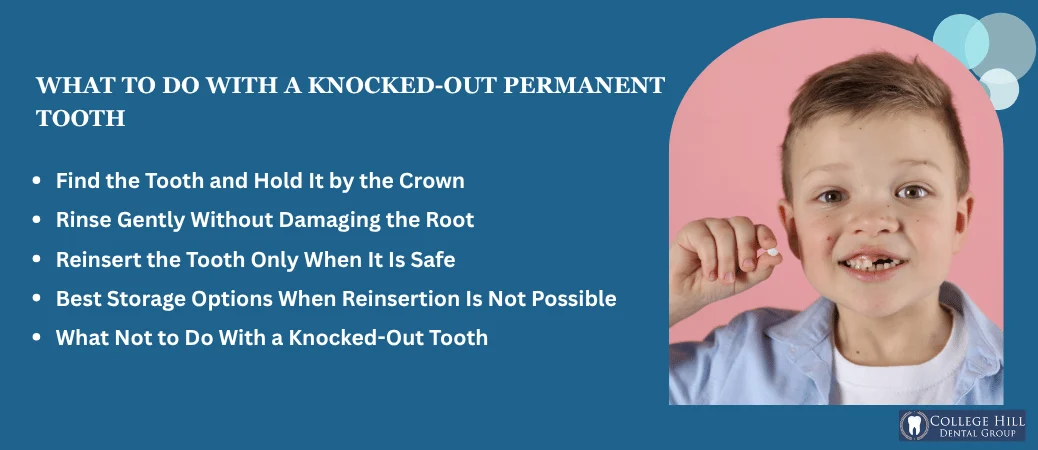
Find the Tooth and Hold It by the Crown
Your first job is to find the tooth. Look on the ground, in grass, or wherever the accident happened.
Once you spot it, pick it up carefully by the crown. This is the white part your child normally chews with.
Never touch the root, which is the pointy end that was inside the gum. The root has tiny cells that help the tooth reattach, and touching it can cause root damage.
If you accidentally handle the root, try not to panic. Just move forward gently to the next steps, and avoid picking the tooth up again by that part.
Rinse Gently Without Damaging the Root
If the tooth has dirt or debris on it, you can rinse it off. Use cold milk or a saline solution instead of tap water.
Tap water contains chemicals that can hurt the delicate cells on the root’s surface. This lowers the chance of a successful reattachment.
Hold the tooth by the crown while you rinse it for just a few seconds. Do not scrub it, wipe it with a cloth, or use soap.
You want to remove visible dirt only, not clean it thoroughly. Gentle handling here really does make a difference.
Reinsert the Tooth Only When It Is Safe
If you feel comfortable doing so, you can try to place the tooth back into the socket. This works best when done within 15 minutes of the injury.
Gently push the tooth back into place using clean fingers, then have your child bite down softly on gauze or a clean cloth. This holds the tooth steady until you reach a dentist.
Only attempt this if your child is calm and able to cooperate. If they are in pain, scared, or the tooth doesn’t slide in easily, don’t force it.
Skip reinsertion if you think there could be other facial injuries. In that case, go straight to storing the tooth safely and get to a dentist or emergency room right away.
Best Storage Options When Reinsertion Is Not Possible
If you cannot put the tooth back in the socket, keeping it moist is your top priority. Never let it dry out, even for a few minutes.
Here are your best options for tooth preservation:
- Cold milk: A simple and effective choice many parents already have on hand
- Saline solution: A gentle option that will not irritate the tooth’s root cells
- Your child’s saliva: Works if you have a small container to spit into
- A tooth preservation kit, such as Save-A-Tooth, if you happen to have one nearby
Place the tooth in your chosen liquid right away, then head to the dentist or ER as fast as you can.
What Not to Do With a Knocked-Out Tooth
A few common mistakes can lower your child’s chances of saving the tooth. Avoid these actions completely.
| Don’t Do This | Why It Hurts the Tooth |
| Rinse with tap water | Chemicals can damage root cells |
| Scrub or wipe the tooth | Removes cells needed for reattachment |
| Touch the root | Causes root damage and lowers success rate |
| Store the tooth dry | Root cells die quickly without moisture |
| Wait to seek care | Delays lower the chance of saving the tooth |
Staying calm and moving quickly gives your child’s tooth the best possible outcome.
Get Emergency Dental Care Without Delay
Time matters when a tooth gets knocked out. Getting to an emergency dentist fast and knowing what happens next can make a real difference in saving your child’s smile.
Call an Emergency Dentist and Share Key Details
Call your dentist right away, even if it’s after hours. Many practices have an on-call emergency dentist for situations like this.
Tell them exactly what happened. Share when the injury occurred, whether the tooth is baby or permanent, and how you’re storing it.
Mention any allergies your child has, especially to medications. The dentist may want to know your child’s tetanus status too, since mouth injuries can sometimes need a booster shot.
Also share if your child hit their head or lost consciousness, even briefly. This helps the dentist decide if your child needs to be seen by a doctor first.
Every dental emergency is different, so quick, clear information helps the dental team prepare before you even arrive.
What Happens During Reimplantation and Splinting
If your child’s permanent tooth was knocked out and you found it, the dentist will try to put it back in the socket. This is called reimplantation, and it works best when done quickly.
Once the tooth is back in place, the dentist attaches a small splint. This is usually a thin wire that holds the tooth steady against the teeth next to it while the area heals.
The dentist may also prescribe antibiotics to help prevent infection. In many cases, your child will need root canal therapy later since the tooth’s nerve was likely damaged.
Follow-up visits are important. The dentist will check how the tooth is healing and make sure the splint is still doing its job.
When a Missing Tooth Cannot Be Saved
Sometimes a tooth can’t be found, or too much time has passed for reimplantation to work. If this happens, your dentist will talk with you about other options.
For older kids and teens whose jaws have finished growing, a dental implant might be a good long-term choice. This involves placing a small post in the jawbone that acts like a tooth root.
Dental implants usually aren’t placed until growth is complete, so younger children may need a temporary option first.
Partial dentures or a space maintainer can hold the spot open until your child is ready for a permanent fix.
Your dentist will guide you through the timeline and help you pick what works best for your child’s age and needs.
Recovery, Follow-Up, and Other Dental Injuries
After a tooth injury, your child’s mouth needs time to heal, and you will need to watch for signs of trouble. Broken teeth and missing pieces also need quick attention, even if a whole tooth was not knocked out.
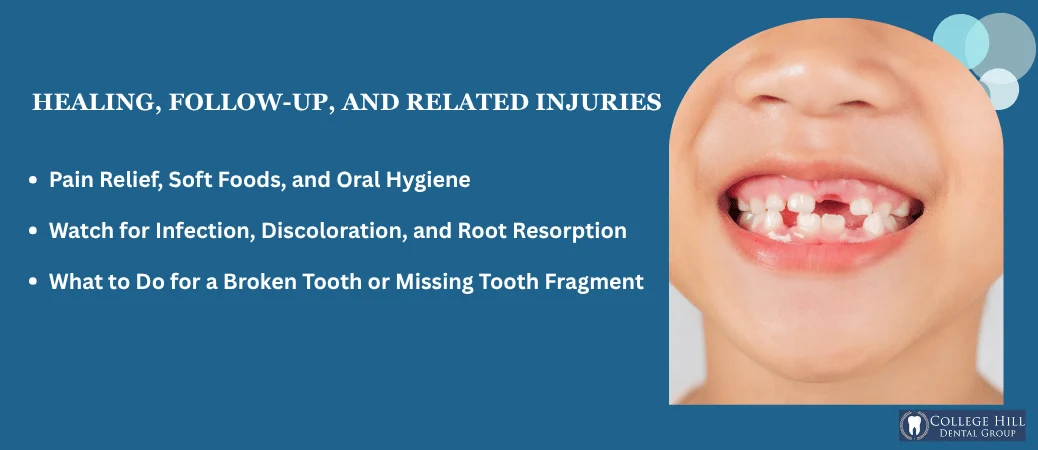
Pain Relief, Soft Foods, and Oral Hygiene
Your child may feel sore for a few days after a dental injury. OTC medication like Acetaminophen can help with pain, but check with your pediatric dentist before giving any medicine.
Soft foods are easier on a healing mouth. Try foods like:
- Mashed potatoes
- Yogurt
- Scrambled eggs
- Smoothies
- Applesauce
Avoid hard, crunchy, or sticky foods for at least a week.
Keeping up with oral hygiene is still important, even with an injury. Brush gently around the sore area, and use a saltwater rinse to help keep the mouth clean and reduce swelling.
Ask your dentist how soon your child can go back to normal brushing habits.
Watch for Infection, Discoloration, and Root Resorption
Keep an eye on the injured tooth over the next few weeks. Signs of infection include swelling, pus, fever, or ongoing pain that gets worse instead of better.
The tooth may also turn gray, yellow, or dark over time. This can mean the nerve inside was damaged, and it may need follow-up care from a pediatric dentist.
Another thing to watch for is root resorption. This happens when the body starts to break down the tooth root, which can lead to the tooth becoming loose or falling out later.
Regular dental checkups matter especially after the injury as they help catch these problems early, before they turn into bigger issues like the need for root canal therapy.
What to Do for a Broken Tooth or Missing Tooth Fragment
A broken tooth needs dental care just as much as a knocked-out one. Try to find any broken pieces, rinse them gently, and bring them to your appointment.
Sometimes a dentist can bond the fragment back onto the tooth.
If a piece is sharp, cover it with dental wax or sugar-free gum to protect your child’s tongue and cheeks until you can get to the dentist.
If you cannot find the missing piece, let your dentist know. In some cases, they may recommend an X-ray to check whether the fragment was swallowed or breathed in, especially if your child was coughing or seemed uncomfortable after the injury.
Prevent Future Mouth Injuries
You can lower your child’s risk of a knocked-out tooth by picking the right gear, making small changes at home and school, and keeping supplies on hand in case an accident does happen.
Choose the Right Mouthguard for Sports
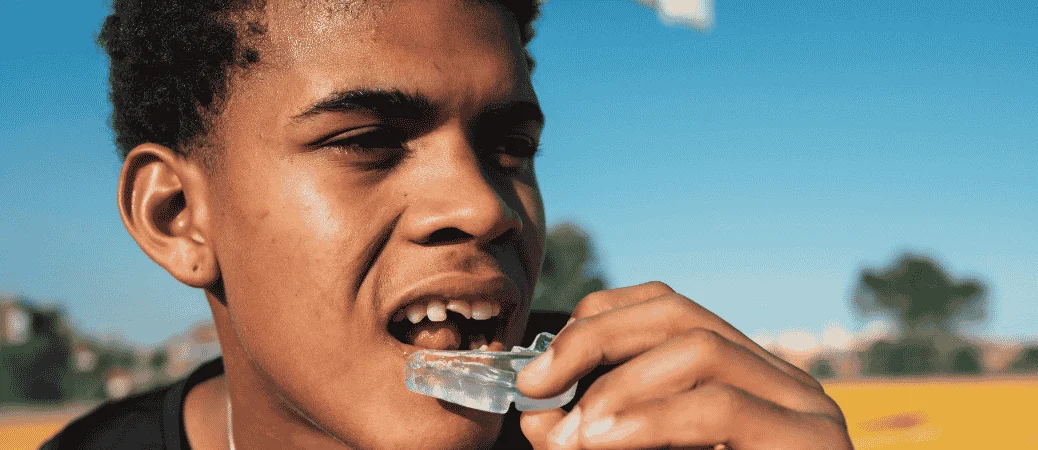
A good mouthguard is one of the easiest ways to prevent dental injuries during sports. Your child needs one for any activity with contact or fast movement, like football, basketball, hockey, or skateboarding.
There are three main types of mouthguards to choose from:
- Stock mouthguards: These come pre-formed and offer the least protection. They’re often attached to helmets.
- Boil-and-bite mouthguards: You soften these in hot water, then bite down to shape them. They’re affordable and offer decent protection, though the fit can be uneven.
- Custom mouthguards: Your dentist makes these to fit your child’s mouth exactly. They cost more but give the best protection and comfort.
Check the mouthguard often for cracks or thin spots, and replace it if it no longer fits well.
Reduce Risks at Home, School, and the Playground
Many tooth injuries happen during everyday activities, not just sports. A simple fall at home or a playground accident can knock out a tooth just as easily as a sports collision.
At home, keep floors clear of clutter and use non-slip mats in the bathroom and kitchen. Add corner guards to sharp furniture edges if you have a toddler learning to walk.
At school or on the playground, teach your child to use equipment the way it’s meant to be used. Climbing structures and monkey bars cause a lot of dental injuries when kids jump off or misuse them.
Encourage your child to wear a bike helmet with a chin strap, since bike falls are a common cause of chipped and knocked-out teeth.
Keep a Tooth Emergency Kit Ready
Having supplies ready before an accident happens can help save a tooth. Put together a small tooth preservation kit and keep it in your first aid box, car, or sports bag.
Your kit should include:
- A small container with a lid
- A carton of milk or a product like Save-A-Tooth[1]
- Clean gauze pads
- Your dentist’s phone number, including their after-hours line
Check the kit every few months to make sure the milk or solution hasn’t expired. Keeping this kit handy means you won’t waste time searching for supplies if your child ever knocks out a tooth.
Frequently Asked Questions
Knowing exactly what to do can feel confusing when your child’s tooth gets knocked out. These answers will walk you through the key steps, from that first scary moment to your visit with the dentist.
What should I do immediately if my child knocks out a tooth?
Take a breath first. Your child will look to you to see how worried you are, so staying calm helps keep them calm too.
Gently wipe your child’s face so you can get a clear look at the injury. If your child hit their head or seemed dazed or confused, get them checked by a doctor right away, since a head injury needs medical attention before dental care.
Once you know your child is okay, look around for the tooth. Finding it quickly gives you the best shot at saving it.
Can a knocked-out tooth be put back in, and how should I handle it?
Yes, a permanent tooth can often go back in its socket, but you need to handle it the right way. Pick it up by the crown, which is the white part you normally see when your child smiles, and never touch the root.
If you feel comfortable doing it, you can try gently placing the tooth back into the socket facing the right way. Have your child bite down softly on a clean cloth to hold it steady while you head to the dentist.
If putting it back in feels too hard or your child won’t hold still, don’t force it. Just get the tooth to the dentist safely instead.
Should I take my child to the dentist or the emergency room for a knocked-out tooth?
In most cases, your regular dentist or a pediatric dentist is the right call for a knocked-out tooth. Call them first, since many offices have same-day emergency slots for situations like this.
You should head to the emergency room instead if your child has a possible broken jaw, won’t stop bleeding, or seems seriously hurt beyond the tooth itself.
For a simple knocked-out tooth, though, a dental visit within the first half hour gives your child the best outcome.
If it happens after hours, many dental offices have an emergency line you can call for guidance.
At College Hill Dental Group, our team can evaluate dental injuries and help you understand the right next steps for protecting your child’s smile.
How should I store a knocked-out tooth on the way to the dentist?
If you can’t put the tooth back in the socket, keeping it moist is the most important thing. A cup of cold milk works well for this.
You can also use a tooth preservation kit if you happen to have one on hand, since these are designed to keep the tooth healthy until you reach the dentist.
Avoid rinsing the tooth with water or scrubbing it, since this can damage the delicate root surface.
Never let the tooth dry out. A dry tooth is much harder to save, even if you get to the dentist quickly.
What if the knocked-out tooth is a baby tooth rather than a permanent tooth?
Baby teeth are handled differently than permanent teeth. Dentists typically do not put a baby tooth back into place, since reinserting it can harm the permanent tooth growing underneath.
Still, you should call your dentist to make sure there’s no damage to the gum or the tooth bud below. They may want to check things out with an exam or an X-ray, just to be safe.
Once you know everything looks fine, you can let your child put the tooth under their pillow. It’s still a good moment for a visit from the tooth fairy.
How quickly does my child need to see a dentist after a tooth is knocked out?
Time matters a lot here, especially for a permanent tooth. Getting to the dentist within 30 to 60 minutes gives your child the best chance of saving the tooth.
The longer a tooth sits outside the mouth, the harder it becomes to save. If you’re not sure how far away your dentist is, call them on the way so they can prepare for your arrival.
Even if some time has passed, it’s still worth going in. Dentists can often help even when things don’t go perfectly according to plan.
Conclusion
If your child knocked out a tooth, knowing what to do in those first few minutes can make a major difference.
Stay calm, check for other injuries, determine whether the tooth is baby or permanent, and handle a permanent tooth carefully while seeking dental care as quickly as possible.
Even when the injury looks minor, a dental evaluation can help identify damage that may not be immediately visible and prevent future complications.
At College Hill Dental Group in Easton, PA, our team is here to evaluate dental injuries and help you take the right steps to protect your child’s oral health and developing smile.