


You may have avoided the dentist for years because of fear, a busy schedule, or both. During that time, small problems likely turned into bigger ones.
Cavities, broken teeth, and gum issues can build up fast and hurt your oral health.
Sedation dentistry lets you stay calm and comfortable so your dentist can complete more treatment in fewer visits.
When you feel relaxed, your dentist can work longer and handle several procedures in one appointment.
This approach helps you fix years of neglected dental work without spreading care across many stressful trips.
If dental anxiety has kept you away, sedation can change your experience. You stay at ease while your dental team restores your smile and protects your long-term oral health.
Key Takeaways
- Sedation dentistry helps you complete more dental work in fewer appointments.
- You stay relaxed and comfortable, even during longer visits.
- Timely treatment protects your oral health and rebuilds your confidence.
Table of Content
- Understanding Sedation Dentistry and Its Options
- Ideal Candidates: Who Benefits Most from Sedation Dentistry?
- How Sedation Dentistry Enables Comprehensive Dental Care
- Safety and Experience During a Sedation Dentistry Appointment
- Long-Term Benefits: Preventing Oral Health Issues and Restoring Confidence
- Frequently Asked Questions
Understanding Sedation Dentistry and Its Options
Sedation dentistry helps you stay calm and comfortable while your dentist fixes serious dental problems.
Different sedation options allow your sedation dentist to match the level of care to your anxiety, health, and treatment needs.
What Is Sedation Dentistry?
Sedation dentistry uses medication to help you relax during dental care. You stay awake in most cases, but you feel calm and less aware of the procedure. Many offices call this conscious sedation or twilight sleep.
A sedation dentist may suggest this approach if you have strong dental fear, a sensitive gag reflex, or need long appointments. It also helps if you have avoided care for years and now need several treatments at once.
You can still respond to questions during treatment, even though you may not remember much afterward. That makes it easier to complete complex dental work safely in fewer visits.
Levels and Types of Sedation Explained
Sedation dentistry offers different levels of relaxation. Your dentist chooses the right one based on your health history and how much work you need.
The main types of sedation include:
- Minimal sedation: You feel relaxed but fully awake.
- Moderate sedation (conscious sedation): You may slur words and remember little of the visit.
- Deep sedation: You are close to sleep but can still be awakened.
- General anesthesia: You are fully unconscious.
Most dental offices use minimal to moderate sedation. Deep sedation and general anesthesia are less common and often used for complex oral surgery.
This flexibility makes it possible to handle years of dental neglect in longer, well-planned visits.
Differences Between Oral, IV, Nitrous Oxide, and General Anesthesia
Each method works in a different way. Your experience depends on how the medication enters your body and how deeply it relaxes you.
Nitrous oxide, also called laughing gas, flows through a mask over your nose. You feel calm within minutes, and the effects wear off quickly. Many patients drive themselves home after this option.
Oral sedation involves taking a prescribed pill before your visit. It makes you drowsy, and you may nap during treatment. You will need someone to drive you home.
IV sedation delivers medication through a vein. It works fast and allows your sedation dentist to adjust the level during the procedure. You often remember little afterward.
General anesthesia puts you fully asleep. It usually takes place in a hospital or surgical setting and requires close monitoring. This option suits major procedures or severe anxiety.
Ideal Candidates: Who Benefits Most from Sedation Dentistry?
Sedation dentistry helps you stay calm, comfortable, and still while your dentist completes more work in fewer visits. It often benefits people with strong fear, high sensitivity, complex treatment plans, or past dental trauma.
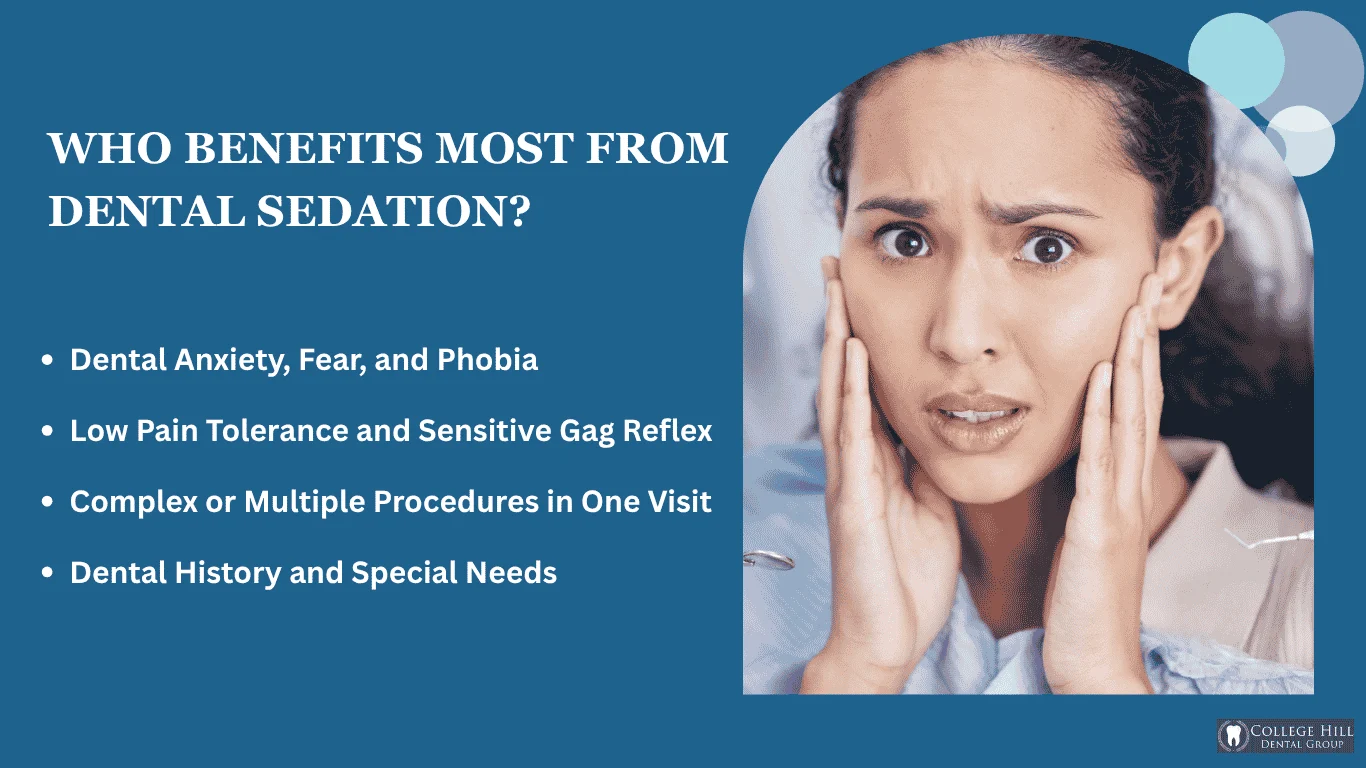
Dental Anxiety, Fear, and Phobia
If you live with dental anxiety, dental fear, or even dental phobia, you may delay care for years. A simple cleaning can feel overwhelming. The sound of a drill or the smell of the office can raise your heart rate fast.
A trained sedation dentist can help you relax during a sedation dentistry appointment. Options range from nitrous oxide to oral medication and IV sedation, depending on your needs.
Most types keep you awake but deeply relaxed.
Many anxious patients say sedation makes it possible to sit through longer visits without panic. This matters when you need multiple procedures in one visit, such as fillings, crowns, or extractions.
Instead of spreading care over many short, stressful appointments, you can complete more treatment at once.
If fear of the dentist has kept you away for years, sedation may help you restart care in a controlled and supportive way.
Low Pain Tolerance and Sensitive Gag Reflex
You may avoid treatment because you have a low pain tolerance. Even with local numbing, you might feel pressure or discomfort that makes it hard to stay still.
Sedation dentistry reduces how strongly you react to these sensations. You stay relaxed, and your body does not tense up as easily. This allows your dentist to work more efficiently and safely.
A strong gag reflex can also block care. It may trigger when tools touch the back of your mouth, especially during X‑rays or impressions. Sedation helps relax the throat muscles and lowers the gag response.
Patients with a sensitive gag reflex often find that sedation turns an impossible visit into a manageable one. This makes longer appointments and multiple dental procedures more realistic.
Complex or Multiple Procedures in One Visit
If you need crowns, root canals, extractions, or full-mouth restorations, your plan may include several steps. Spacing them out over months can feel exhausting.
Sedation dentistry makes multiple procedures in one visit more practical. You stay calm for a longer block of time, and your dentist can complete more work in a single session.
Some practices explain how sedation helps patients who need extensive treatment in fewer visits. The goal is not speed alone. The goal is steady, focused care without repeated stress.
Fewer appointments can mean fewer injections, fewer days off work, and less time worrying about the next visit.
Dental History and Special Needs
Your dental history also matters. If you have avoided care due to past trauma, painful procedures, or embarrassment about the condition of your teeth, sedation can lower the emotional barrier to treatment.
People with special needs or conditions that make it hard to sit still may also benefit. Sedation helps create a controlled setting where your dentist can work safely and calmly.
Children and adults with certain medical or behavioral challenges often struggle with long appointments.
When your history, comfort level, or physical limits make standard visits difficult, sedation gives you a realistic path to complete long‑delayed dental work.

How Sedation Dentistry Enables Comprehensive Dental Care
Sedation dentistry helps you stay relaxed while your dentist completes several treatments in fewer visits. It allows you to address serious oral health problems without feeling overwhelmed or rushed.
Completing Multiple Procedures in Fewer Appointments
When you feel calm and comfortable, your dentist can complete multiple dental procedures in one visit. This may include fillings, deep cleanings, crowns, or even a root canal during the same appointment.
Sedation keeps you relaxed but responsive. You stay awake, yet you feel little to no discomfort.
This relaxed state allows your dentist to work longer without causing stress. Instead of scheduling three or four short visits, you may handle much of the work at once.
Fewer appointments mean less time off work and fewer gaps between treatments.
That matters when untreated cavities or gum disease could worsen if you delay care.
Managing Extensive and Neglected Dental Needs
If you have avoided the dentist for years, you may face gum disease, tooth loss, infections, or broken teeth.
Treating these issues often requires a step-by-step plan that includes deep cleanings, extractions, root canal therapy, and new restorations.
Sedation supports longer and more complex visits. It is often recommended for people with strong dental anxiety or difficulty sitting still.
You remain comfortable while your dentist focuses on restoring your oral health. This approach helps stop active disease and repair damage without spreading treatment over many stressful appointments.
You also reduce the risk of canceling visits due to fear, which helps you stay on track.
Efficiency and Comfort for Smile Makeovers and Full-Mouth Restorations
A smile makeover or full-mouth restoration often combines cosmetic dentistry and restorative care. You may need veneers, crowns, implants, or bridges along with treatment for gum disease or decay.
These plans involve careful coordination. Sedation allows your dentist to complete extensive work in fewer, longer sessions instead of many short ones.
Some practices note that sedation makes it possible to complete several treatments during the same appointment, which improves efficiency and comfort.
You spend less time in the chair over the course of treatment. At the same time, you receive thorough care that restores function and improves the look of your smile.
With fewer interruptions between procedures, your results can come together in a more organized and predictable way.
Safety and Experience During a Sedation Dentistry Appointment
You deserve to feel safe and informed during your sedation dentistry appointment. Clear steps, close monitoring, and trained professionals help you complete years of dental work in fewer, manageable visits.

What to Expect Before, During, and After Sedation
Before treatment, your sedation dentist reviews your medical history, current medications, and past reactions to anesthesia.
You discuss options such as nitrous oxide, oral sedation, IV sedation, or general anesthesia, depending on your needs and the amount of work planned.
For deeper relaxation, many practices follow protocols such as health screening and clear instructions. During the visit, you remain in a state of conscious sedation unless you receive general anesthesia.
With nitrous oxide, you stay awake and relaxed. With oral sedation or IV sedation, you feel drowsy and calm but can still respond to simple directions.
After treatment, the team monitors you until you meet discharge guidelines. If you had IV sedation or oral sedation, you will need a responsible adult to drive you home.
Monitoring and Professional Oversight
Your safety depends on trained staff and constant observation. A qualified sedation dentist and team track your vital signs throughout the procedure.
They monitor:
- Heart rate
- Blood pressure
- Oxygen levels
- Breathing rate
For IV sedation and general anesthesia, the team adjusts medication in small amounts to maintain the right level of relaxation. They keep emergency equipment and reversal medications on hand.
These steps lower risk and help anxious patients feel more secure during longer appointments.
Preparation, Recovery, and Aftercare
You play an important role in keeping your appointment safe. Follow fasting rules if your dentist gives them. Wear loose clothing, and avoid alcohol before your visit.
After sedation, you may feel sleepy, especially with oral sedation or IV sedation. Plan to rest for the remainder of the day. Avoid driving, signing legal papers, or making major decisions until the medication fully wears off.
Most patients recover quickly from nitrous oxide and return to normal activities the same day. Deeper forms of sedation may require several hours of rest.
Clear written instructions help you manage pain, swelling, and follow-up care so you can continue repairing neglected dental work without setbacks.
Long-Term Benefits: Preventing Oral Health Issues and Restoring Confidence
When you treat years of dental problems in fewer visits, you do more than fix teeth. You protect your oral health and rebuild trust in dental care.

Breaking the Cycle of Avoidance
Dental fear often starts after one painful or stressful visit. You delay care, small problems grow, and your anxiety increases.
Sedation helps you stay calm and comfortable while your dentist repairs multiple issues at once. You may remain awake but relaxed, which is the goal of sedation dentistry.
This approach works well if you struggle with dental phobia, a strong gag reflex, or long procedures.
When you complete several treatments in fewer appointments, you reduce the number of times you must face that fear. That matters if you need fillings, deep cleanings, a root canal, or even a full-mouth restoration.
Fewer visits mean fewer chances to cancel or postpone care. You break the pattern of avoidance and start moving forward.
Preventing Further Oral Health Problems
Untreated cavities and gum disease rarely stay the same. They spread and often lead to tooth loss.
Sedation makes it easier to handle longer sessions, so your dentist can treat multiple problem areas at once. Many patients find it helpful for complex care.
By completing deep cleanings and treating decay early, you lower your risk of infection. You also protect nearby teeth from damage.
When appointments feel manageable, you are more likely to return for follow-up care. That steady care prevents small issues from turning into major procedures.
Building Positive Dental Experiences
Comfort changes how you view the dental office. When you feel calm during treatment, you begin to replace fear with trust.
Sedation can make long or detailed procedures feel shorter and less stressful. Many patients say it helps create a more relaxed visit, which supports better long-term oral health.
As your teeth heal, your confidence often improves. You may feel ready to explore cosmetic dentistry, a smile makeover, or other finishing touches after your health issues are under control.
A healthier smile can change how you speak, eat, and interact with others. When you no longer hide your teeth, you often feel more at ease in daily life.
Frequently Asked Questions
Sedation dentistry uses specific medications to reduce fear, control movement, and limit pain during long or complex visits.
It also allows your dentist to complete multiple procedures in one sitting while keeping you comfortable and closely monitored.
What types of sedation are available for anxious dental patients?
Dentists use several forms of sedation based on your anxiety level and the length of your treatment. The most common options include nitrous oxide, oral medication, and IV sedation.
With nitrous oxide, you breathe a mild gas through a mask. It helps you relax within minutes and wears off quickly after your visit.
Oral conscious sedation involves taking a prescribed pill about an hour before treatment. You feel very calm and may get drowsy, but you can still respond to your dentist.
IV sedation works faster and provides a deeper level of relaxation. Your dental team monitors your heart rate and blood pressure during the entire procedure.
How safe is dental sedation, and what are the most common risks or side effects?
Dental sedation is considered safe when trained professionals administer it and monitor you closely. Your dentist reviews your medical history and current medications before recommending any option.
Common side effects include drowsiness, dry mouth, and mild nausea. With oral or IV sedation, you may feel groggy for several hours afterward.
More serious risks are rare but can include breathing changes or drops in blood pressure. Your dental team tracks your vital signs throughout the visit to reduce these risks.
Will I be awake during sedation, and will I feel or remember anything?
Most dental sedation is a form of conscious sedation. You stay awake and can respond to simple instructions, but you feel deeply relaxed.
You should not feel pain because your dentist also uses local anesthesia to numb the treatment area. Many people remember little or nothing about the procedure, especially with oral or IV sedation.
With nitrous oxide, you usually remain fully aware and can drive yourself home once the effects wear off.
How many procedures can usually be completed in one appointment with sedation?
Sedation allows your dentist to work for longer periods without causing you stress. This makes it possible to complete several treatments in one visit.
For example, your dentist may place multiple fillings, perform tooth extractions, or begin crown work during a single extended appointment. This approach reduces the number of separate visits you need.
If you have years of neglected dental work, your dentist may still divide care into two or three longer sessions to protect your health and comfort.
Who is a good candidate for sedation if they’ve avoided the dentist for years?
You may be a good candidate if you feel strong fear about dental treatment or avoid care because of past bad experiences. Sedation can also help if you have a strong gag reflex or trouble sitting still.
People who need complex or time‑consuming procedures often benefit from sedation. Different sedation levels can match different anxiety levels and treatment needs.
Your dentist will review your health history to confirm that sedation is appropriate for you.
What should I do to prepare for a sedation appointment, and will I need someone to drive me home?
Your dentist will give you clear instructions before your appointment. You may need to avoid food or drink for several hours, especially if you receive oral or IV sedation.
Wear comfortable clothing and bring a full list of your medications. Follow all timing instructions for taking any prescribed sedative.
If you receive oral or IV sedation, you will need a responsible adult to drive you home.
With nitrous oxide alone, most patients can safely drive themselves once the mask is removed and oxygen clears the medication from their system.