



If you’ve been dealing with jaw pain and headaches that seem connected to your TMJ, you’ve probably wondered whether Botox could actually help. The short answer is yes, for many people.
Botox for TMJ headaches relaxes overactive jaw muscles that contribute to tension and pain, though results vary from person to person.
The idea behind using Botox for TMJ disorders is pretty straightforward. When you clench or grind your teeth, your jaw muscles work overtime.
This constant tension can lead to headaches, facial pain, and jaw stiffness. Botox temporarily blocks the nerve signals that cause these muscles to contract so intensely, giving them a chance to relax.
While Botox isn’t approved by the FDA specifically for TMJ treatment yet, many people have found relief from their symptoms.
The effects typically last three to four months, and it usually takes anywhere from a day to two weeks to feel the difference.
Understanding how Botox works for jaw pain can help you decide if it’s worth exploring as part of your treatment plan.
Key Takeaways
- Botox helps TMJ headaches by relaxing overactive jaw muscles that cause tension and pain
- Results typically last three to four months and you may need repeat treatments for ongoing relief
- Botox works best when combined with other treatments like physical therapy and should only be done by a licensed medical professional
Table of Content
- Understanding TMJ Disorders and Related Headaches
- How Botox Works for TMJ Headaches
- Research and Real-World Evidence on Efficacy
- Benefits and Potential Risks of Botox for TMJ Headaches
- Treatment Experience and Cost Considerations
- Comparing Botox With Alternative Therapies for TMJ-Related Headaches
- Frequently Asked Questions
Understanding TMJ Disorders and Related Headaches
The temporomandibular joint connects your jaw to your skull, and problems with this joint can lead to widespread pain that affects your head, face, and neck. When jaw muscles become strained or inflamed, they often trigger headaches that can feel similar to migraines.
What Is the Temporomandibular Joint?
Your temporomandibular joint acts like a sliding hinge on each side of your jaw. This joint lets you open and close your mouth so you can talk, chew, and yawn.
The joint combines bones, muscles, ligaments, and a small disc that cushions movement. When all these parts work together smoothly, you don’t notice them at all.
But when something goes wrong with any part of this system, you develop what doctors call TMJ disorder or TMD.
These disorders affect the joint itself and the muscles around it. The pain can spread beyond your jaw to other areas of your face and head.
Common Causes of TMJ-Related Pain
Several factors can lead to temporomandibular disorders. Jaw clenching and teeth grinding (bruxism) put constant pressure on your jaw muscles and joint. Many people grind their teeth at night without knowing it.
Injuries to your jaw, head, or neck can damage the joint. Arthritis can also affect the temporomandibular joint just like other joints in your body.
Stress often makes TMJ symptoms worse because it causes muscle tension throughout your face and jaw.
Poor posture, especially forward head position, strains the muscles that support your jaw. Some people are born with jaw alignment issues that put extra stress on the joint.
Typical TMJ Symptoms and Headache Patterns
TMJ disorders cause several recognizable symptoms:
- Jaw pain that gets worse when you chew or talk
- Jaw stiffness that limits how wide you can open your mouth
- Jaw clicking or popping sounds when you move your jaw
- Facial pain around your cheeks and temples
- Ear pain or ringing in your ears
The headaches from TMJ often feel different from regular headaches. You might notice pain that starts in your jaw and spreads to your temples. These headaches typically get worse throughout the day as jaw muscle pain builds up.
Some people with TMJ disorders also experience migraines. The constant muscle tension in your jaw can trigger these severe headaches.
The pain might throb on one or both sides of your head, and you may feel it most intensely near your temples or behind your eyes.
How Botox Works for TMJ Headaches
Botox targets the overactive jaw muscles that contribute to TMJ headaches by temporarily blocking nerve signals. The injection process focuses on specific muscles around your jaw, and you can expect to feel relief within days to weeks after treatment.
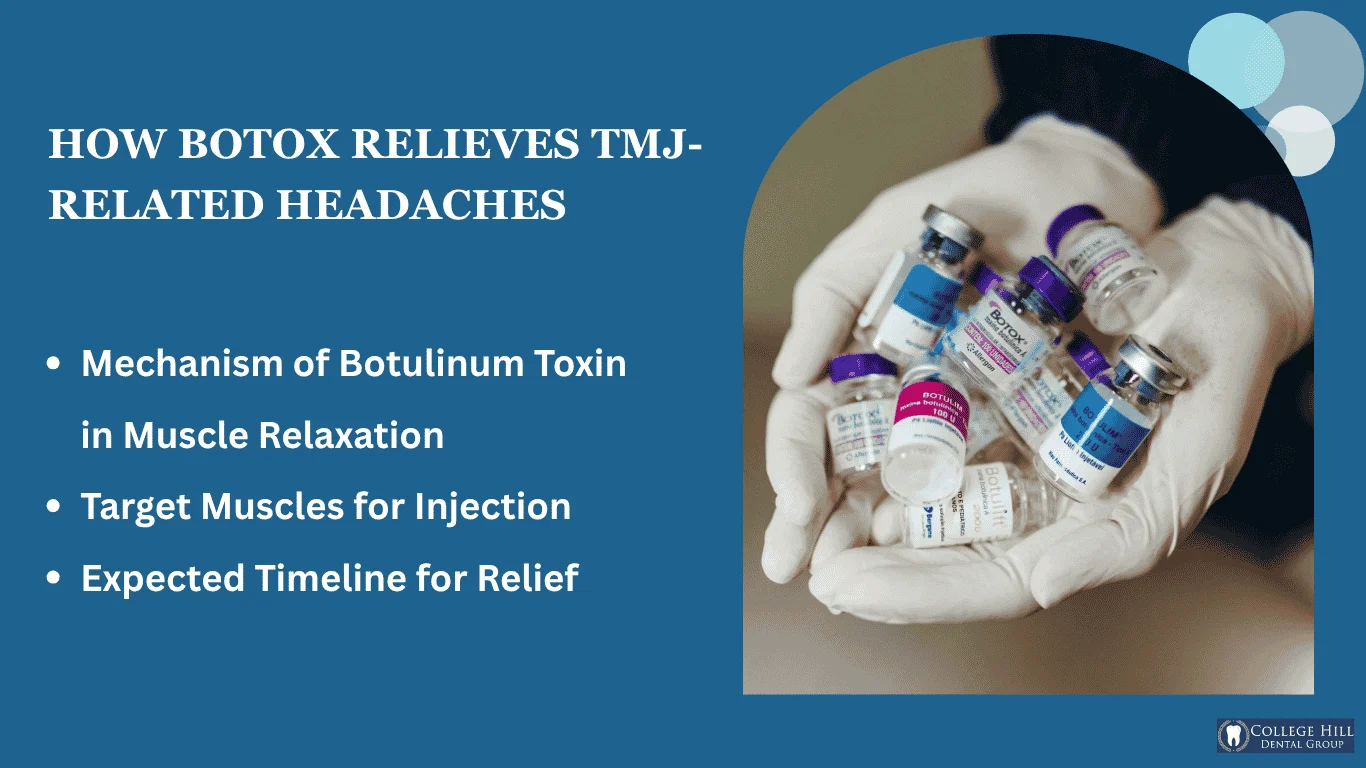
Mechanism of Botulinum Toxin in Muscle Relaxation
Botulinum toxin works by blocking nerves in the muscles where it’s injected, which temporarily reduces their ability to contract.
When your jaw muscles can’t overwork themselves anymore, this helps break the chronic pain cycle that causes TMJ headaches.
The toxin prevents your nerve cells from releasing a chemical messenger called acetylcholine. Without this signal, your muscles can’t tighten and clench as forcefully as before.
This reduction in muscle activity doesn’t paralyze your jaw completely. You can still chew, talk, and move your mouth normally.
The Botox treatment simply calms down hyperactive muscles that contribute to jaw pain, clicking, clenching, and headaches.
Target Muscles for Injection
Your provider will focus on the masseter muscle and the temporalis muscle during your Botox injections. The masseter is the large muscle on the side of your jaw that you use for chewing.
The temporalis muscle extends from your temple down the side of your head.
These jaw muscles become overactive when you grind your teeth or clench your jaw. This constant tension triggers the headaches associated with temporomandibular joint disorder.
Getting Botox for TMD requires precision and should be given by an oral surgeon, ENT specialist, or experienced plastic surgeon. The exact injection sites depend on where you experience the most muscle tension and pain.
Expected Timeline for Relief
You won’t feel immediate relief after your Botox injections. It can take anywhere from one day to a couple of weeks to feel the effects on your jaw tension and headaches.
Most people who get Botox for TMJ pain find results last three to four months. If you have severe pain or very strong jaw muscles, you may need more frequent treatments.
The timeline varies from person to person based on your muscle strength and the severity of your symptoms.
Some people notice reduced migraines and jaw clenching within the first week, while others need two full weeks before they experience significant relief.
Research and Real-World Evidence on Efficacy
Studies on Botox for TMJ headaches show mixed results, with some research finding benefits for muscle-related pain while others question its effectiveness compared to placebo treatments.
The evidence becomes clearer when looking at specific patient types and how Botox compares to other treatment options.
What Clinical Studies Show
Research on Botox for TMJ disorders has not yet reached definitive conclusions about its effectiveness. Some clinical trials have shown promising results for pain reduction in patients with muscle-related TMJ problems.
However, one significant study found that Botox worked about the same as saline injections. This research on treatment-resistant muscle pain suggests the treatment may not be as effective as many people believe.
A systematic review and meta-analysis concluded that Botox type A is safe and effective for reducing pain in patients with muscular temporomandibular disorders.
The problem is that different studies use different methods and measure different outcomes, making it hard to compare results.
Studies on bruxism and botulinum toxin remain inconclusive, with no evidence that teeth grinding can be cured with these injections.
Comparisons With Other TMJ Treatments
When compared to other evidence-based TMJ treatments, Botox shows varying levels of effectiveness. Physical therapy, occlusal splints, and arthrocentesis are commonly used alternatives that have their own research backing.
A comparative analysis of botulinum toxin evaluated how well Botox reduces pain and improves jaw function compared to placebo and other interventions.
The results show that traditional treatments like occlusal splint therapy often work just as well for many patients.
Physical therapy offers benefits without the need for injections and can address underlying muscle tension issues.
Arthrocentesis, a minimally invasive joint procedure, may be more appropriate for joint-related TMJ problems rather than muscle issues.
Other botulinum toxin products like Dysport and Xeomin work similarly to Botox but have different formulations. Your dentist or oral surgeon can discuss which option might be best for your specific situation.
When Botox Is Most Effective
Botox injections appear to work best for specific types of TMJ problems. Clinical outcomes data from 71 patients showed that those with chronic TMJ disorders associated with or without bruxism had varying responses to treatment.
You may be a better candidate for Botox if you have:
- Muscle-related TMJ pain that hasn’t responded to conservative treatments
- Chronic muscle tension in your jaw muscles
- Severe bruxism that damages your teeth and causes headaches
- Limited success with occlusal splints and physical therapy
The treatment seems less effective for joint-related problems or acute TMJ issues. Your response may also depend on how long you’ve had symptoms and whether other underlying conditions contribute to your pain.
Patients with treatment-resistant cases sometimes benefit most, though the research on this remains inconsistent.
Benefits and Potential Risks of Botox for TMJ Headaches
Botox treatment offers specific advantages for TMJ-related headaches, but it also comes with possible side effects and isn’t right for everyone.
Understanding both the benefits and risks helps you make an informed choice about whether this treatment fits your needs.
Advantages of Targeted Botox Therapy
Botox injections can relieve jaw pain, clicking, clenching, and headaches by relaxing overactive facial muscles. The treatment targets the specific muscles causing your TMJ discomfort.
You might notice reduced muscle tension within a few days to two weeks after treatment. Many people experience fewer headaches because Botox stops the constant muscle contractions that trigger pain signals.
The injections work by blocking nerve signals to your jaw muscles. This gives your temporomandibular joint time to rest and heal from constant stress.
Botox can reduce inflammation and improve jaw movement in many patients. You may find it easier to open your mouth and chew without pain.
Treatment sessions are quick, usually taking just 10 to 15 minutes. Results typically last three to six months before you need another round of injections.
Possible Side Effects and Complications
Temporary muscle weakness is one of the most common side effects you might experience after Botox treatment. This can affect nearby muscles and make certain facial expressions feel different.
Common mild side effects include:
- Pain or bruising at injection sites
- Headache immediately following treatment
- Difficulty chewing or changes in your bite
- Mild facial drooping
You could experience an allergic reaction to Botox, though this is rare. Signs include itching, rash, difficulty breathing, or swelling of your face or throat.
Some people notice their smile looks uneven temporarily. Minor side effects and long-term damage can occur if Botox isn’t administered properly.
More serious complications are uncommon but can happen. These include problems swallowing, speaking, or breathing if the Botox spreads beyond the treatment area.
Candidacy and Contraindications
You’re likely a good candidate if muscle overactivity drives your jaw muscle pain and headaches. Botox works best when muscle tension, clenching, and grinding cause your TMJ discomfort.
You should not get Botox if you:
- Are pregnant or breastfeeding
- Have a neuromuscular disorder like myasthenia gravis
- Are allergic to any ingredients in Botox
- Have an infection at the planned injection site
Your doctor needs to know about all medications and supplements you take. Blood thinners and certain antibiotics can increase bruising or other complications.
Botox isn’t a cure for every TMJ condition. You might need other treatments if your pain comes from structural joint problems rather than muscle issues.
Discussing the risks and benefits with a healthcare professional helps determine if Botox fits your specific situation. Your dentist or doctor should evaluate your jaw function and medical history before recommending treatment.
Treatment Experience and Cost Considerations
Getting Botox for TMJ involves a quick office visit with specific injection techniques, and the total price typically ranges from $500 to $700 per treatment session.
Finding the right provider and understanding insurance limitations are important steps before moving forward.
What to Expect During a Botox Session
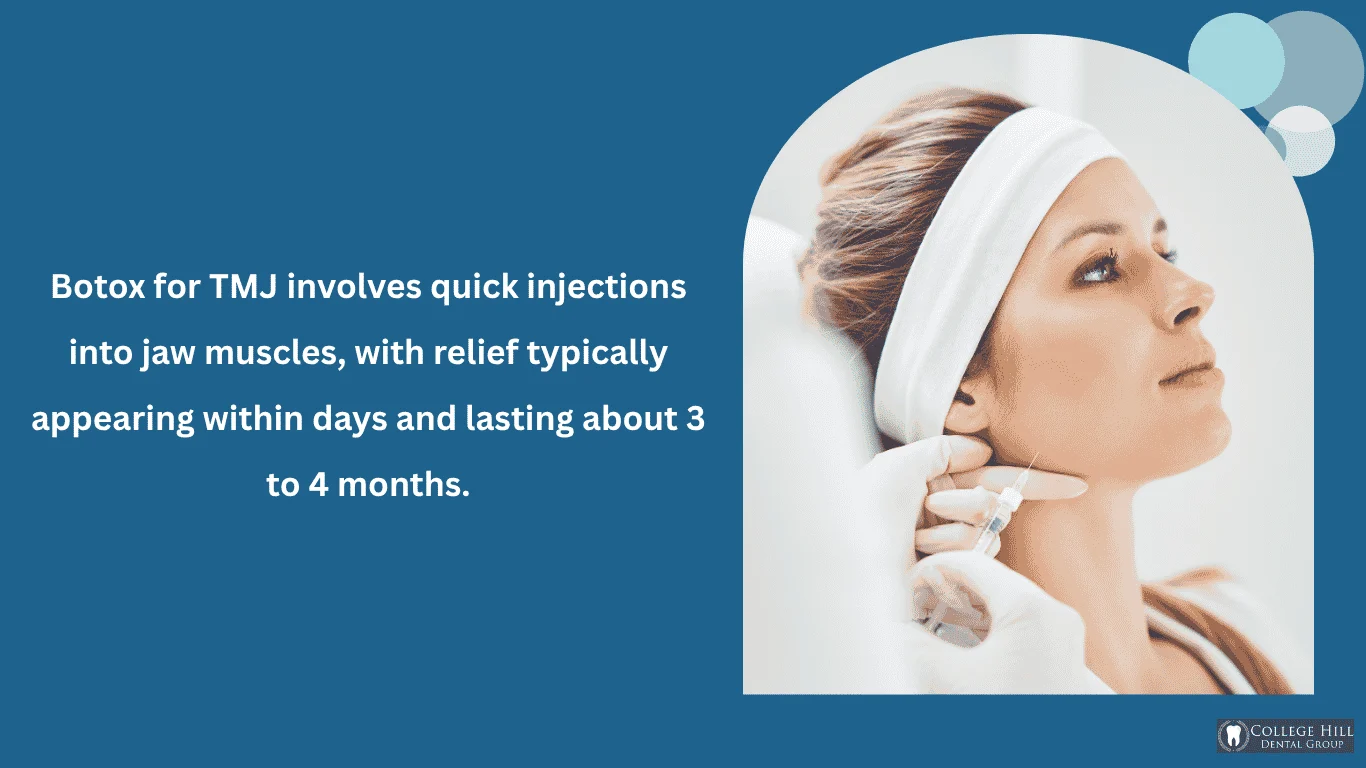
Your Botox injection appointment will usually take about 10 to 30 minutes from start to finish.
The provider will identify the specific jaw muscles causing your TMJ symptoms, which typically include the masseter and temporalis muscles on the sides of your face and temples.
You’ll receive multiple small injections directly into these targeted areas. Most people describe the feeling as a small pinch or brief sting. The needles used are very thin, so the discomfort is minimal.
No anesthesia is needed for the procedure. You can return to your normal activities right away, though your provider may ask you to avoid rubbing the injection sites for a few hours.
Results don’t appear immediately. You’ll typically notice improvements in jaw tension and headaches within 3 to 10 days after treatment.
The effects last about 3 to 4 months, which means you’ll need repeat sessions to maintain relief from your symptoms.
Choosing Qualified Providers
Dentists are commonly trained to administer Botox for TMJ since they understand jaw anatomy and muscle function. However, other medical professionals including doctors and nurse practitioners can also provide this treatment.
Look for providers who have specific experience treating TMJ disorders rather than just cosmetic Botox applications. Ask about their training and how many TMJ patients they’ve treated.
A qualified provider should evaluate your jaw thoroughly and discuss whether you’re a good candidate.
Your provider should also explain alternatives like physical therapy or arthrocentesis before recommending injections.
TMJ treatment typically starts with conservative approaches, and Botox works best when other methods haven’t provided enough relief.
Check credentials and verify that your provider is licensed in your state. Don’t hesitate to get a second opinion if you’re unsure about a treatment plan.
Cost and Insurance Coverage Tips
The cost of Botox treatment for TMJ typically ranges between $500 and $700 per session. The exact amount depends on how many units you need and how severe your symptoms are.
Factors affecting your total cost:
- Number of injection sites required
- Units of Botox needed (usually 25-100 units per side)
- Your provider’s fees and location
- Severity of your TMJ disorder
Most insurance plans don’t cover Botox injections for TMJ because the FDA hasn’t officially approved this use yet. Some plans may offer partial coverage if your doctor documents that you’ve tried other treatments first without success.
Contact your insurance company before scheduling treatment to understand what they’ll cover. Ask your provider’s office if they offer payment plans or financing options to make the treatment more affordable.
Some patients save money by combining TMJ treatment with cosmetic Botox if they’re interested in both benefits.

Comparing Botox With Alternative Therapies for TMJ-Related Headaches
When dealing with TMJ-related headaches, you have several treatment options beyond Botox injections. Physical therapy and occlusal splints offer proven relief with minimal risks, while procedures like arthrocentesis address more severe cases.
Conservative and Non-Invasive Therapies
Physical therapy stands out as a first-line treatment for TMJ disorders and related headaches. You’ll work with a therapist who uses manual techniques and exercises to improve jaw function and reduce pain.
Research shows that therapeutic exercises combined with manual therapy improve pain, function, and quality of life for most TMJ patients.
Occlusal splints, also known as nightguards, protect your teeth from grinding while you sleep. If you have bruxism or teeth grinding, these devices can reduce muscle pain during chewing.
However, evidence for long-term benefit remains limited compared to other treatments.
Cognitive behavioral therapy helps you manage chronic jaw muscle pain, especially when stress triggers your symptoms. This approach works best when combined with supervised exercises and biofeedback techniques.
Minimally Invasive and Surgical Options
Arthrocentesis involves flushing out your jaw joint with sterile fluid to remove inflammatory byproducts. Your doctor may follow this with injections of platelet-rich plasma or hyaluronic acid to reduce pain and improve jaw movement.
Corticosteroid injections provide short-term relief for acute inflammation. Betamethasone and dexamethasone may help with pain for a few weeks to months, but they don’t improve jaw motion or quality of life.
These injections carry a risk of joint damage with repeated use.
Surgery is reserved for severe cases where conservative treatments have failed. Total TMJ replacement significantly reduces pain and improves function, but it carries risks like infection and heterotopic ossification.
Combining Treatments for Best Results

You don’t have to choose just one treatment approach for your TMJ-related headaches. Evidence-based TMJ treatment often involves multiple therapies working together.
Starting with physical therapy while using a nightguard for bruxism gives you two complementary approaches.
If these conservative options don’t provide enough relief after several months, you might add Botox injections to relax overactive jaw muscles. Many patients find that combining treatments addresses different aspects of their condition.
Your healthcare provider can help you create a treatment plan that starts with the least invasive options first. This step-by-step approach lets you find the right combination without jumping straight to more aggressive treatments.
Looking for lasting relief from jaw discomfort and frequent headaches? Book an appointment at College Hill Dental Group in Easton, PA to explore solutions that can improve your comfort and quality of life.
Frequently Asked Questions
Botox injections can block nerve signals to jaw muscles and reduce tension that triggers headaches. Most people see results within a few days to two weeks, with effects lasting three to four months before needing another treatment.
How does Botox work to relieve jaw tension and headache pain related to TMJ?
Botox blocks nerves in the muscles where it’s injected, which temporarily reduces muscle contraction. When your jaw muscles can’t contract as much, they stop overworking themselves.
This reduction in muscle activity helps break the chronic pain cycle. The relaxed muscles put less strain on your temporomandibular joint and reduce the tension that causes headaches.
Many patients report improvement in headaches related to jaw tension after Botox treatment. The muscle relaxation decreases both the frequency and intensity of your headaches.
Who is a good candidate for Botox treatment when TMJ symptoms include frequent headaches?
You might be a good candidate if conservative treatments haven’t worked for you. Doctors usually try Botox when physical therapy, medications, and splint therapy don’t provide enough relief.
Your quality of life should be negatively affected by your symptoms. If jaw pain makes eating, singing, or laughing uncomfortable, Botox could be worth discussing with your provider.
Botox works best when muscle overactivity is a major driver of your TMJ symptoms. You need to be an adult in generally good health to receive the treatment safely.
How long does it usually take to feel relief after Botox injections for TMJ-related headaches?
It can take anywhere from a day to a couple of weeks to feel the effects of Botox injections. Your individual response time depends on factors like muscle strength and the severity of your symptoms.
Some people notice changes within the first few days. Others need to wait up to two weeks before experiencing significant relief from their headaches.
How long do the results typically last, and how often would I need repeat treatments?
Most people who get Botox for TMJ pain find that it lasts for about three or four months. The effects are temporary because your body eventually breaks down the Botox.
You may need more frequent treatments if your pain is severe. People with very strong jaw muscles might also require injections more often than every four months.
What are the possible side effects or risks of Botox injections in the jaw muscles?
Common side effects include pain, bruising, swelling, and redness at the injection site. You might also experience headaches, neck pain, or flu-like symptoms after your treatment.
Unwanted facial paralysis or cosmetic changes can happen in some cases. Examples include drooping eyelids or an uneven smile.
More serious but rare side effects include infection, allergic reactions, muscle weakness, nausea, and indigestion. It’s extremely rare for legitimate Botox administered by a licensed healthcare provider to cause botulism.
How does Botox compare with other TMJ headache treatments like bite guards, physical therapy, or medications?
Botox is usually used as a supplemental therapy when conservative treatments aren’t providing enough relief. It’s not meant to replace other treatment methods entirely.
Research has produced mixed results about Botox effectiveness. Some studies suggest it does a better job on teeth grinding than on pain itself.
You’ll likely continue doing physical therapy, splint therapy, and taking medications even if you receive Botox. The combination approach often works better than any single treatment alone.