



Are you wondering what happens at a dental implant consultation? You want clear answers about your options, the process, and the cost before you move forward.
During a dental implant consultation, you meet with your dentist to review your health, examine your mouth, take imaging, and create a personalized plan for replacing missing teeth.
You talk about your goals, explore tooth replacement options, and find out if you are a good candidate for dental implants.
You also learn about the benefits of dental implants, possible prep work like bone grafting, and what your timeline may look like.
By the end of your implant consultation, you should know your next steps and feel confident about your treatment plan.
Key Takeaways
- You receive a full exam, health review, and imaging to check if implants are right for you.
- You get a clear treatment plan that outlines procedures, timing, and expected costs.
- You leave with specific next steps and answers to common questions about dental implants.
Table of Content
- The Initial Evaluation Process
- Advanced Diagnostic Imaging
- Personalized Treatment Planning
- Cost, Financing, and Insurance Considerations
- Preparing for Your Consultation and Next Steps
- Frequently Asked Questions
The Initial Evaluation Process
Your dentist studies your health background, checks your mouth in detail, and looks for signs of gum disease or bone loss. These steps help the dental team decide if implants are safe and likely to succeed.
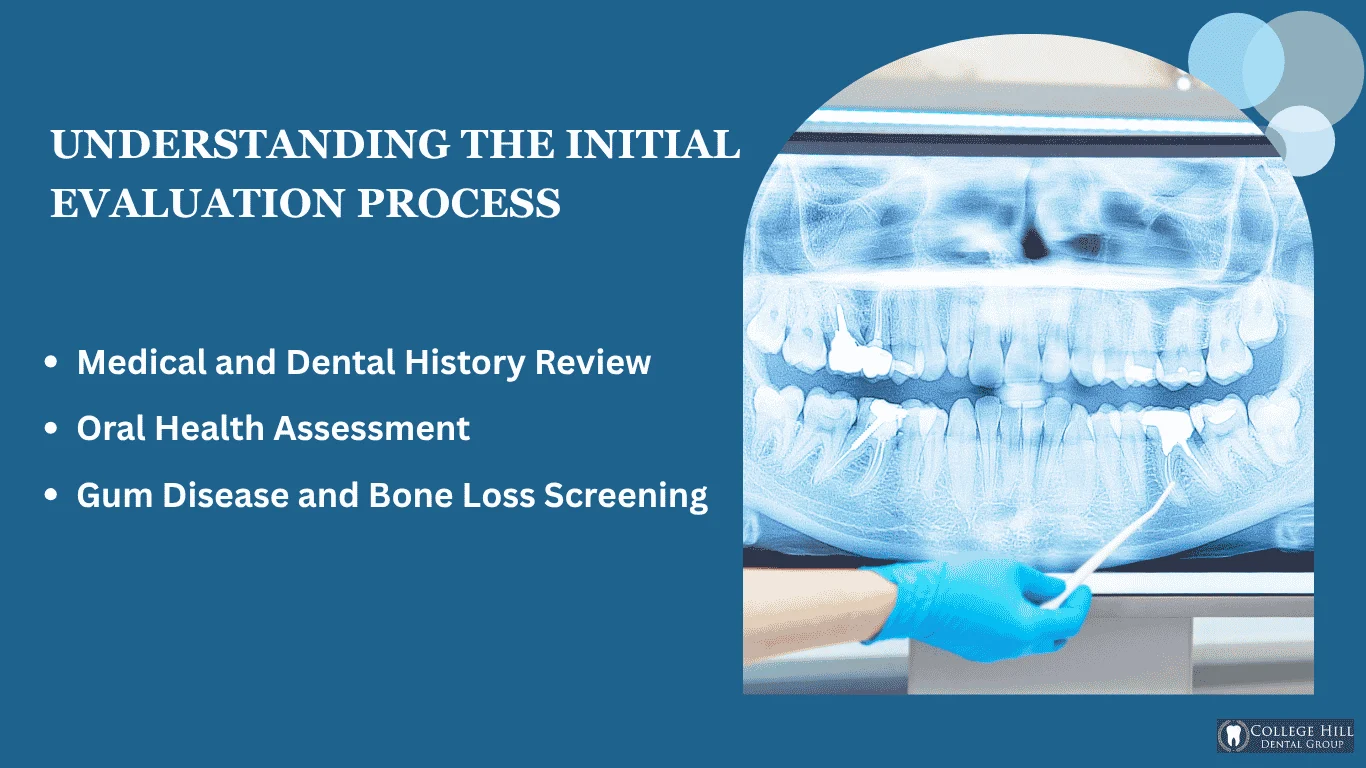
Medical and Dental History Review
Your visit starts with a close look at your medical history and dental records. You will answer questions about past surgeries, chronic illnesses, and any current medications.
Conditions like diabetes, heart disease, or osteoporosis can affect healing. Smoking and certain medications may also slow bone growth after implant placement.
Bring a list of prescriptions and recent dental treatments. Share details about past tooth extractions, gum problems, or failed dental work.
The dental team uses this information to spot risks early. If needed, they may contact your physician or adjust the treatment plan to protect your health.
This review helps them decide if you need extra care before surgery or if you are ready to move forward.
Oral Health Assessment
Next, your dentist performs a full oral examination. They check your teeth, gums, bite, and areas with missing teeth.
You may have digital X-rays or 3D scans. These images show the shape of your jaw and the position of nerves and sinuses. Many offices explain this step clearly during a dental implant consultation.
The dentist also checks how your upper and lower teeth fit together. A poor bite can place stress on an implant.
During this oral health evaluation, the team looks for cavities, infections, or loose teeth. They want a clean and stable foundation before placing an implant.
If they find problems, they may suggest treatment first to improve your gum health and lower your risk of complications.
Gum Disease and Bone Loss Screening
Healthy gums and strong bone hold your implant in place. That is why your dentist checks closely for gum disease and bone loss.
They measure the depth of the spaces between your teeth and gums. Deep pockets can signal periodontal disease. Swelling, bleeding, or gum recession also raise concern.
X-rays help show how much bone supports your teeth. If bone has shrunk after tooth loss, the implant may not have enough support.
When needed, the dentist may recommend periodontal treatment or a bone graft before implant surgery. These steps build a healthier base and improve long-term success.
By finding and treating these issues early, your dental team protects both your new implant and your overall oral health.
Advanced Diagnostic Imaging
Your dentist uses detailed imaging to map your jaw, measure bone, and plan exact implant placement. These tools reduce guesswork and help prevent problems with nerves, sinuses, and weak bone areas.

Digital X-Rays and 3D CBCT Scans
You will usually start with digital X-rays. These images show your teeth, roots, and basic bone levels. Digital systems use less radiation than older film X-rays and allow your dentist to adjust contrast for a clearer view.
For dental implants, most offices also take a 3D CBCT scan. A cone beam CT scan for dental implants creates a three-dimensional image of your jaw, nerves, and sinuses. This view helps your dentist see structures that normal X-rays cannot show.
A CBCT scan lets your dentist measure exact distances. They can check how close the implant site is to the sinus or the main nerve in your lower jaw.
This level of detail improves accuracy during implant placement and lowers the risk of complications.
Bone Density and Jawbone Assessment
Dental implants need strong, healthy bone to stay stable. Imaging allows your dentist to check your jawbone density, height, and width before surgery.
Advanced scans play a key role in improving accuracy in implant diagnostics. A cone beam CT (CBCT) shows the shape of your bone in three dimensions. Your dentist can measure thickness and spot areas where bone may be too thin or too soft.
If your bone density is low, your dentist may discuss bone grafting. This procedure adds bone material to build up the area before placing the implant.
Clear imaging helps you understand why grafting may be needed and how much bone support you currently have.
Digital Impressions and Modeling
In many offices, you will not need messy trays filled with impression material. Instead, your dentist may use digital impressions with a small handheld scanner.
The scanner captures detailed images of your teeth and gums. It builds a 3D model on a computer screen in real time. According to this dental implant consultation guide, diagnostic images and planning tools help shape your treatment options.
With digital modeling, your dentist can:
- Plan the exact implant position
- Choose the correct implant size
- Design your future crown for proper bite alignment
You can often see the model during your visit. This visual plan helps you understand how the implant will fit into your smile and how each step connects to the final result.

Personalized Treatment Planning
Your dentist builds a clear treatment plan based on your exam, scans, and health history. You learn if you qualify for implants, what type you need, and how long each step will take.
Candidacy Evaluation and Alternative Solutions
Your dentist reviews your gums, bone level, and overall health to decide if you qualify for implant dentistry. They check for gum disease and may suggest periodontal treatment before moving forward.
If your jawbone lacks strength, you may need a bone graft or sinus lift, also called sinus augmentation. These steps build support so the implant post can stay stable.
Smokers and people with uncontrolled health issues may need extra planning to lower risk.
You also discuss the type of tooth replacement that fits your case. Options may include:
- Single-tooth implant
- Multiple implants
- All-on-4
- Bridges or dentures
Your dentist explains why one option works better for your bite and bone structure. You leave knowing if you need tooth extractions or other prep work before implant placement.
Mapping the Treatment Timeline
You review a clear treatment timeline so you know what happens and when. Implant dentistry takes place in stages, and healing time matters.
Most plans follow this order:
- Tooth extraction or bone graft, if needed
- Implant placement
- Healing period for osseointegration
- Abutment placement
- Final crown, bridge, or denture
Osseointegration means the implant post fuses with your jawbone. This step can take a few weeks to several months. Your dentist explains how your health and bone quality affect healing time.
You also learn how many visits you need and how long each appointment lasts. Clear timing helps you plan work, travel, and recovery.
Discussing Implant Placement and Surgery Steps
Your dentist or oral surgeon explains how implant surgery works in simple terms. During implant placement, they place a small titanium post into your jawbone.
The procedure usually uses local anesthesia. Some patients choose sedation for comfort. Surgery often takes one to two hours, depending on how many implants you need.
After healing, your provider performs abutment placement. The abutment connects the implant post to your final tooth. A prosthodontist may design and attach the crown or bridge to match your bite and nearby teeth.
You also review risks, swelling, and aftercare steps. Clear instructions help protect the implant and support long-term success.
Cost, Financing, and Insurance Considerations
You will review the full cost of your treatment, what your insurance may cover, and how you can manage payments. Clear numbers and written estimates help you plan with confidence.
Receiving a Cost Estimate
During your visit, your dentist will give you a detailed cost estimate based on your specific treatment plan. This estimate usually includes the implant post, abutment, crown, imaging, and follow-up visits.
If you need extra steps, such as bone grafting or tooth removal, those costs should appear separately. Ask for a written breakdown so you can see what each part costs.
A simple table can help you review the estimate:
| Item | What It Covers |
| Implant post | Surgical placement in the jaw |
| Abutment | Connector piece |
| Crown | Final visible tooth |
| Imaging | X-rays or 3D scans |
| Follow-up visits | Healing checks |
Dental implant services often range from $3,000 to $4,500 per implant, depending on your needs.
Understanding Insurance Coverage
Most dental insurance coverage does not fully pay for implants. Some plans may cover part of the crown but not the surgical placement.
Ask your dental office to check your insurance coverage before you commit. They can send a pre-treatment estimate to your insurance company so you know your expected out-of-pocket cost.
You should also ask:
- Is there a yearly maximum?
- Is there a waiting period?
- Are alternative treatments covered instead?
Clear answers help you avoid surprise bills later.
Exploring Payment and Financing Options
If insurance does not cover the full cost, ask about payment plans and other financing options. Many offices offer monthly financing plans that spread payments over time.
Some clinics work with third-party lenders. Others offer in-house plans with little or no interest for a set period.
You may discuss:
- Down payment amount
- Monthly payment size
- Length of the financing plan
- Interest rates
Your dental team should review all terms in writing. Careful financial planning helps you decide if treatment fits your budget now or if you should schedule it later.
Preparing for Your Consultation and Next Steps
You can make your initial consultation more useful by asking clear questions, bringing the right records, and knowing what happens after the visit. These steps help you understand what happens during a dental implant consultation and what comes next.

Key Questions to Ask Your Dental Team
Bring a written list of questions so you do not forget anything.
Ask if you are a good candidate for implants and why. If you have osteoporosis or take bisphosphonates, ask how these may affect bone healing and implant success. These details matter because implants need strong bone support.
You should also ask:
- How many implant cases have you handled?
- What imaging tests will you use?
- Will I need bone grafting?
- What is the expected healing time and total timeline?
- How many follow-up visits will I need?
Ask about anesthesia options and what you will feel during and after surgery. Clear answers help you feel prepared and reduce stress.
How to Prepare Medical and Dental Records
Your dental team needs accurate health information to plan safely.
Bring a full list of medications, including doses. Include drugs for blood pressure, diabetes, and bone health. If you take bisphosphonates for osteoporosis, make that clear.
Share past dental records if you have them. This includes:
- Recent X-rays
- Notes about gum disease treatment
- Details about tooth extractions
Be honest about smoking, teeth grinding, or poor oral hygiene. These habits can slow healing time and raise the risk of implant failure.
If you have chronic health issues, bring contact details for your physician. Your dentist may need to coordinate care before surgery.
Post-Consultation Steps and Follow-Up Visits
After your consultation, your dentist will outline a treatment plan.
You may need extra steps before surgery. These can include treating gum disease, removing damaged teeth, or placing a bone graft. Each step affects your recovery time and total timeline.
Once you move forward, schedule all required follow-up visits. These visits let your dentist check healing and make sure the implant bonds to your jawbone.
During healing, follow instructions closely. Brush and floss as directed, avoid hard foods, and keep all appointments.
Most patients need several months for full healing before the final crown is placed. Staying consistent with oral hygiene and follow-up visits helps protect your investment and supports long-term success.
Frequently Asked Questions
You may wonder how long the visit takes, what tests you need, and how much the full treatment will cost. Clear answers help you plan your time, budget, and next steps with confidence.
How long does the first implant appointment usually take?
Most first visits last about 60 to 90 minutes.
During this time, your dentist reviews your health history, checks your teeth and gums, and may take images. If you need a 3D scan or extra X-rays, the visit can take a little longer. Some offices explain the full process during this visit.
What will the dentist check to see if I’m a good candidate for implants?
Your dentist checks your gums, jawbone, and nearby teeth. Healthy gums and enough bone support are key for a stable implant.
They also review your bite and look for signs of grinding. A full evaluation helps them decide if implants fit your needs.
If you do not have enough bone, your dentist may talk about bone grafting before placing an implant.
Will I need X-rays or a 3D scan at the consultation?
In most cases, yes. Dentists often take digital X-rays to check bone levels and tooth roots.
Many offices also use a cone beam CT scan. This 3D scan shows the exact height and width of your jawbone and helps plan the implant position with care.
What medical history or medications should I tell the dentist about before planning implants?
Tell your dentist about any heart problems, diabetes, or immune conditions. These issues can affect healing.
List all medications, including blood thinners and steroids. Some drugs can slow healing or raise the risk of infection.
How much will the full implant treatment cost, and what payment options are available?
The total cost depends on how many implants you need and whether you need extra steps like bone grafting.
The consultation itself may cost between $100 and $300, depending on the office and what it includes, as noted in this breakdown of an implant consultation appointment.
Many offices offer payment plans, third-party financing, or phased treatment to spread out the cost. Ask for a written estimate so you know what each step includes.
What are the next steps and timeline after the consultation if I decide to move forward?
If you choose to move ahead, your dentist schedules the implant surgery. In some cases, you may need a cleaning or bone graft first.
After the implant is placed, the bone usually heals around it over three to six months. This process is called osseointegration.
Once healing is complete, your dentist places the final crown. A clear step-by-step plan helps you understand your timeline from start to finish.