A single dental implant can last for decades, but the crown on top may need replacing sooner. An implant crown may last 10 to 15 years or longer, although some crowns need replacement sooner.
With good daily care and regular checkups, an implant post may last for decades. The crown can also last many years, but its lifespan depends on factors such as bite forces, material, and daily habits.
A worn crown is normal upkeep. It is a different event from losing the implant.
That said, the most common question patients ask about a single tooth dental implant is how long it will last. The numbers are encouraging. They also come with a few honest conditions that you can mostly control.
Key Takeaways
- The post anchored in your jaw is built to last decades, and the crown is the part you replace.
- Gum inflammation around the implant is the biggest long-term threat, and it is largely preventable.
- Daily cleaning, regular checkups, and a night guard if you grind give you the best odds.
How Long Does a Single Dental Implant Last?
Long-term studies show that most implant posts are still in place 15 to 20 years after surgery, and many go well beyond that.
The figures you see quoted shift depending on whether a study counts implants that are merely still present or implants that are fully healthy.
Can the Implant Post Last 20 to 30 Years?
Yes, for most healthy patients who keep up with care. The implant post (also called the implant fixture) is a small screw, most often titanium, placed into your jawbone.
These are called endosteal implants, meaning “in the bone.”
Over a few months, bone grows tightly against the titanium implant post. Once that bond forms, the post does not decay and cannot get a cavity.
Implants placed in the 1980s and 1990s are still working in many mouths today.
That track record is why dentists give a 20- to 30-year estimate. It is a realistic range. A lifetime result is possible, though no dentist can promise it.
What Do 10- and 20-Year Survival Rates Tell Us?
Survival rates tell you the share of implants still in the mouth after a set number of years. A review of tooth and implant longevity found that 10-year implant survival ranged from 82% to 94%, depending on the group studied.
| Time after placement | What studies report |
| 10 years | Most dental implants remain in place after 10 years, although survival rates vary by study and patient health factors. |
| 15 years | Many implants remain functional, but survival rates vary by study and patient risk factors |
| 20+ years | Many implants still working, with numbers varying by study |
Long-term implant survival varies with patient health, oral hygiene, smoking habits, and the condition of the surrounding bone and gums.
These findings describe outcomes across different patient groups, so your individual outlook may be different.
Why Is Survival Different from Success?
Survival means the implant is still there. Success means it is stable, comfortable, free of infection, and surrounded by healthy bones.
An implant can survive for years while dealing with gum swelling or slow bone loss.
Dentists have used stricter standards for decades. An early, well-known paper proposed criteria for judging implant success that went beyond simply counting implants still in place.
Those criteria include no movement, no ongoing pain, and only small amounts of bone loss over time.
For you, this means a high survival rate is good news, and the goal is a healthy implant you never have to think about. Checkups catch the small problems that a survival number hides.
How Long Do the Crown and Abutment Last?
An implant crown may last 10 to 15 years or longer, depending on its material, bite forces, and daily care.
The abutment, which connects the crown to the implant post, may also last for many years. Both components can often be replaced without removing a healthy implant.
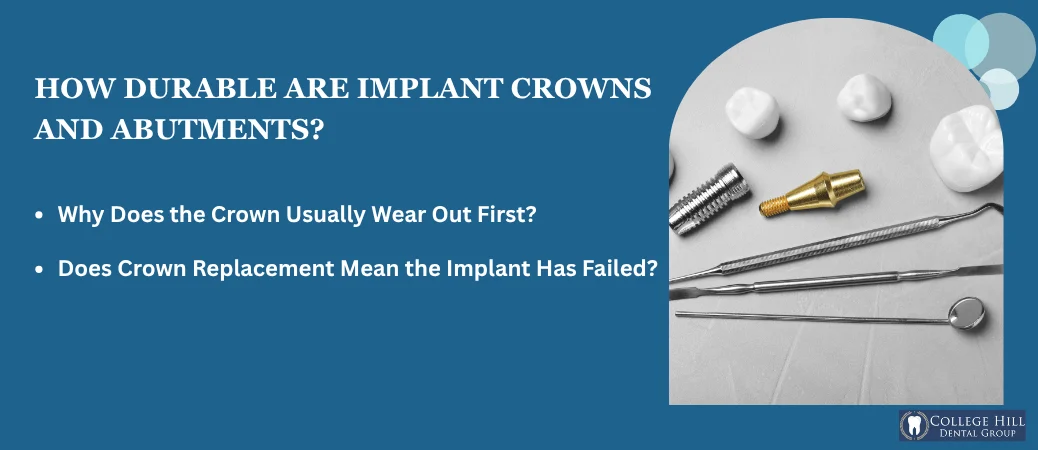
Why Does the Crown Usually Wear Out First?
The crown takes every bite you chew. It faces hard foods, temperature changes, and grinding forces every day. Over time, porcelain chips, edges wear, or the crown no longer matches nearby teeth.
Research on natural-tooth crowns points the same way. About 50% to 80% of crowns may need replacing within 15 to 20 years.
If you want a sense of how restorations age, this guide on how long dental crowns last explains the common wear patterns.
The abutment and the tiny screw holding it are metal parts under repeated stress. According to research, lab testing on a titanium alloy abutment screw shows that heavy, uneven loads can reduce its fatigue resistance.
In plain terms, a screw can loosen over the years, especially if your bite is off or you grind.
Does Crown Replacement Mean the Implant Has Failed?
No. Crown replacement is a normal part of long-term implant maintenance. Dental implant failure means the post itself has lost its hold in the bone.
When an abutment and crown need work, your dentist may be able to remove the old crown, take a new impression, and attach a replacement to the same implant post. If the implant is stable, surgery is usually unnecessary.
Plan for possible crown replacement costs in your long-term budget. When comparing a dental implant vs bridge for one missing tooth, consider not only the initial treatment but also the maintenance and replacement needs of each option over time.
What Can Cut Those Years Short?
Most implants that fail early or late trace back to a short list of causes: gum infection around the post, poor bonding with the bone, smoking, certain health conditions, and heavy grinding.
Many of these are within your control.
How Do Gum Inflammation and Bone Loss Affect Longevity?
Gum inflammation is the leading long-term threat. It starts as peri-implant mucositis, which is red, puffy, bleeding gum tissue around the implant. At this stage it can be reversed with cleaning and better home care.
If plaque builds up around an implant, inflammation may progress to peri-implantitis, which can damage the supporting bone.
Some patients experience minor bone-level changes during early healing, while others maintain stable bone levels.
Continued or increasing bone loss may indicate a problem that needs evaluation. Dental X-rays help your dentist monitor these changes over time.
Watch for these signs:
- Bleeding when you brush near the implant
- Swelling, redness, or pus
- A bad taste in one spot
- Gums pulling back to show metal
- A crown that feels loose
What Happens If the Post Does Not Bond with the Jawbone?
Osseointegration is the process of bone growing tightly onto the implant surface. If it does not happen, the implant stays loose and must be removed. This kind of failure shows up in the first several months.
Low bone density or thin bone is a common reason. Years of a missing tooth let the jawbone shrink. A bone graft before or during surgery rebuilds the site so the post has solid support.
Strong jawbone health at the start gives you the best foundation. If an early failure does happen, the site can heal, and a new implant can often be placed later.
How Do Smoking, Health Conditions, and Grinding Change the Outlook?
Smoking reduces blood flow to the gums and can interfere with healing after dental implant surgery.Smoking is linked with a higher risk of implant failure compared with nonsmoking.
Quitting before treatment and avoiding tobacco afterward can help reduce this risk and support healthier healing.
Health conditions play a role too. Uncontrolled diabetes slows healing and raises infection risk.
Osteoporosis, some osteoporosis drugs, radiation therapy, and immune-suppressing medicines can affect bone around the implant. None of these automatically rules you out, but they call for careful planning.
Teeth grinding adds heavy force. Natural teeth sit in a cushioning ligament, and implants do not have one. Constant clenching can chip the crown, loosen the screw, or stress the bone.
If you are wondering whether you are a good candidate for dental implant treatment, your dentist can evaluate your medical history, bone health, and grinding habits before recommending the next step.
How Can You Help Your Implant Last Decades?
Careful daily cleaning, professional checkups, and protecting the crown from grinding forces are the habits that keep implants healthy longest. Patients who stick with them tend to see far fewer problems over the years.
What Should Daily Implant Cleaning Include?

Dental implant care includes removing plaque where the crown meets the gum. That seam is where trouble starts. A few minutes a day keeps it clean.
A simple routine:
- Brush twice a day with a soft brush, angled toward the gumline.
- Use an interdental brush or floss around the implant once a day.
- Try a water flosser if tight spaces are hard to reach.
- Use an antimicrobial rinse only if your dentist suggests it.
In practice, patients who follow these tips on keeping your gums healthy and use an interdental brush correctly may notice less gum bleeding over time.
How Often Should Your Dentist Check the Implant?
Most implant patients do well with dental checkups every 3 to 6 months. If you have a history of gum disease, the shorter end of that range may be more appropriate.
Regular preventive dentistry visits are important to monitor your implants, check your gum health, and remove plaque and tartar from areas that are difficult to clean at home.
At these visits, your dentist checks:
- Gum health and pocket depth around the implant
- Bone levels on periodic X-rays
- Whether the crown or screw has loosened
- How your bite lands on the implant
At College Hill Dental Group in Easton, PA, our team offers a range of dental services to support long-term oral health, including preventive care and ongoing implant maintenance.
Regular examinations and professional cleanings help us monitor your implants, assess gum health, and identify potential problems early.
When Might a Night Guard Help?
A night guard helps if you grind or clench, especially while you sleep. Signs include a sore jaw in the morning, headaches, worn tooth edges, or a partner hearing grinding at night.
A custom nightguard spreads the force across your teeth. That takes stress off the crown and the screw underneath. Store-bought guards exist, but a custom fit stays in place better and feels more comfortable.
If you grind your teeth, ask your dentist whether a custom night guard could help protect your implant crown and surrounding teeth.
Keeping the Post Healthy for the Long Run

A dental implant post can remain stable for decades with proper care, while the crown may eventually need repair or replacement.
The lifespan of each component depends on your oral health, daily habits, and the condition of the surrounding tissues.
The numbers are strong. Most implants are still in place after 15 years, and the failures that do happen cluster around smoking, diabetes, and gum inflammation that went untreated.
Your part comes down to a few steady habits:
- Clean the gumline around the implant every day with a brush and interdental tool.
- See your dentist every 3 to 6 months, with X-rays as advised.
- Wear a night guard if you grind.
- Manage health conditions like diabetes, and avoid tobacco.
Frequently Asked Questions
Can a single dental implant last 20 years or longer?
Yes, many implant posts last 20 years or more with good care. Large studies show most implants are still in place at 15 years, and some last for life. Your crown will likely be replaced at least once in that time.
How long does a single-tooth implant take to heal?
Most single implants need about three to six months for the bone to bond with the post. If you need a bone graft first, add a few more months. Your dentist places the final crown once the implant is stable.
Is a dental implant still worth considering at age 70?
Yes, age alone does not rule you out. Your general health, bone quality, and ability to clean the implant count more than your birthday.
These dental procedures for patients over 50 and senior dental health tips cover what to discuss with your dentist.
How long are dental implants guaranteed for?
Dental implant warranties vary by manufacturer and dental practice. Coverage may depend on the implant components, treatment circumstances, and specific warranty conditions.
Ask your dentist what is covered, whether maintenance requirements apply, and which situations may affect coverage. Request the warranty terms in writing before treatment.
Can the crown be replaced without replacing the implant?
Yes, a crown can be swapped out while the post stays in your jaw. Your dentist removes the old crown, takes an impression, and attaches a new one without surgery.