


If you’re planning to get veneers and want a brighter smile, you might wonder about the best order for these treatments.
The timing of whitening teeth before veneers matters because it affects how natural and bright your final results will look.
Most dentists recommend whitening your teeth before getting veneers because veneers don’t respond to whitening treatments once they’re placed.
When you whiten first, your dentist can match your veneers to your brightest natural tooth shade. This creates an even, balanced appearance across your entire smile.
Whitening after veneers is possible, but more complicated. You can only brighten your natural teeth, not the veneer material itself.
This means you need to carefully whiten only certain teeth to match the color of your existing veneers.
Key Takeaways
- Whitening before veneers lets your dentist create shells that match your brightest natural tooth shade
- Veneers are made from materials like porcelain that don’t change color with whitening treatments
- Planning your whitening and veneer treatments in the right order helps you avoid mismatched tooth colors
The Relationship Between Teeth Whitening And Veneers
Veneers and teeth whitening work differently on your teeth, and understanding how they interact helps you plan your cosmetic dentistry treatments in the right order.
Natural tooth enamel responds to whitening agents, but veneer materials stay the same color permanently once placed.
How Veneers Interact With Whitening Agents
Teeth whitening products use bleaching agents like hydrogen peroxide or carbamide peroxide that penetrate natural tooth enamel.
Your natural teeth are porous, which allows these agents to break down stains and lighten the color.
Veneers don’t have this same porous structure. Whether you have porcelain or composite veneers, the materials won’t absorb whitening agents.
This means if you try to whiten your teeth after getting veneers, only your natural teeth will change color.
The result can be a mismatched smile where your veneers appear darker than your surrounding teeth. This is why whitening before veneers gives you greater control over your final shade.
Differences Between Porcelain And Composite Veneers
Porcelain veneers have a translucent quality that mimics natural enamel and resist staining better than composite options. They’re also more durable and maintain their color longer.
Composite veneers are made from resin material and can be more affordable. However, they’re slightly more porous than porcelain, which means they may pick up surface stains from coffee, wine, or tobacco over time.
Neither type will actually lighten from whitening treatments though. Both materials stay the same shade they were when your dentist placed them.
The main difference is how well they resist new stains, not how they respond to bleaching.
Can You Whiten Veneers Or Only Natural Teeth?
You can only whiten natural teeth. Whitening products only work on natural tooth enamel because bleaching agents need porous material to penetrate and break down stains.
Veneers, crowns, and bonding materials don’t react to these agents at all. If your veneers look dull or stained, professional cleaning and prevention might help remove surface buildup. But if you want whiter veneers, actually, replacement is your only option.
This is exactly why dental experts recommend whitening before getting veneers. Your dentist can match your new veneers to your brightened natural teeth, ensuring everything looks uniform from the start.
Why Whitening Before Veneers Is Usually Recommended
Most dentists suggest whitening before veneers because veneers cannot be lightened once they’re placed. This approach gives you control over your final shade and creates a more uniform smile.
Benefits Of Whitening First
When you whiten your natural teeth before getting veneers, you start with the brightest possible base for shade planning. Your dentist can then design veneers that match your newly brightened natural teeth.
Veneers are made from porcelain or composite materials that don’t respond to bleaching agents. Once they’re bonded to your teeth, their color is permanent.
If you whiten after veneer placement, only your natural teeth will lighten, creating an uneven appearance.
Professional teeth whitening before veneers also helps you achieve the brightest smile possible.
Many people want a white, radiant smile, and starting with whitened natural teeth means your veneers can be crafted to match that brighter shade across your entire smile.
Shade Planning And Matching
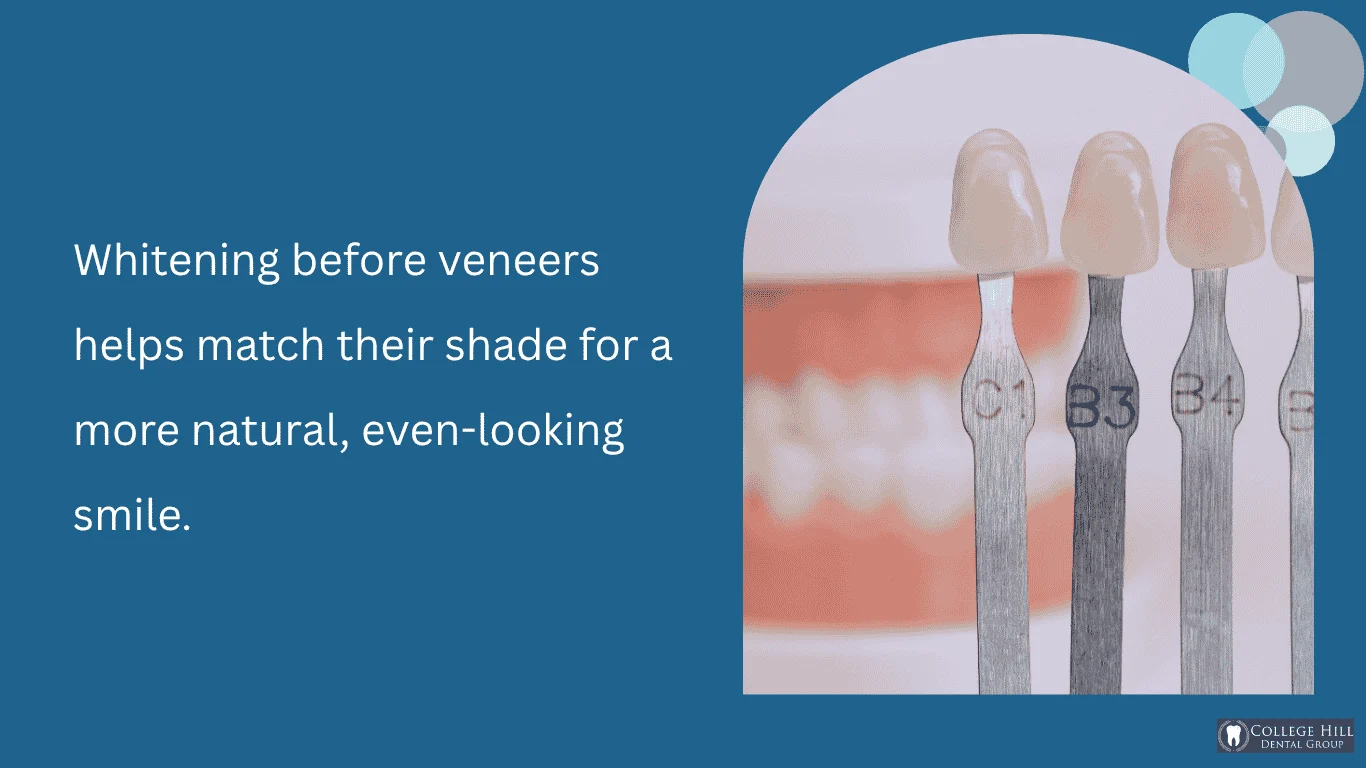
Shade matching is one of the most important steps in veneer treatment. Your dentist uses a shade guide to select the right color for your veneers based on your natural teeth.
If you whiten first, your dentist can match the veneers to your newly brightened tooth shade for a natural, balanced look. This creates seamless blending between your veneers and surrounding teeth.
Without whitening beforehand, your veneers might be lighter than your natural teeth. This creates visible color differences that can look unnatural, especially if you only get veneers on your front teeth.
Timing And Waiting Period After Whitening
You shouldn’t get veneers immediately after whitening. Dental professionals recommend waiting about two weeks after whitening to allow the color to stabilize before veneer placement.
Whitening treatments can cause temporary tooth sensitivity. Waiting a week or two lets your teeth settle and return to normal sensitivity levels before veneers are bonded.
This makes the veneer procedure more comfortable.
The waiting period also ensures the whitening results are final. Teeth can shift slightly in shade during the first few weeks after treatment, so your dentist gets an accurate color reading for perfect shade matching.
Potential Issues Of Whitening After Veneers
Whitening after veneers creates several problems that can affect your smile’s appearance and require costly fixes.
The porcelain material won’t respond to whitening treatments, which leads to mismatched tooth colors and limits your options for future smile improvements.
Color Mismatch And Aesthetic Challenges
When you try whitening after veneers, your natural teeth will brighten while your veneers stay the same shade. This creates a two-tone effect where your real teeth look bright white but your veneers appear yellow or dull by comparison.
Porcelain is a non-porous material that resists traditional whitening treatments. The bleaching agents in whitening products simply can’t penetrate the surface to change the color.
While this quality helps your veneers resist coffee and wine stains over time, it also means they’re locked into their original shade forever.
The color difference becomes especially noticeable if you have veneers on your front teeth.
Your side teeth might look several shades whiter than your veneers, which draws attention to the dental work instead of creating a natural-looking smile.
Risks Of Touch-Up Whitening
Repeated whitening treatments on teeth surrounding your veneers can damage your natural tooth enamel.
You might be tempted to whiten multiple times to get your natural teeth as bright as possible, but this approach weakens your teeth and increases sensitivity.
Your gums can also become irritated from frequent whitening sessions. The chemicals in whitening products may cause inflammation and discomfort, especially if they contact the edges where your veneers meet your natural teeth.
The mismatch often gets worse with each whitening session. Your natural teeth continue to get lighter while your veneers remain unchanged, making the color difference more obvious.
Veneer Replacement For Enhanced Brightness
If your veneers look dull compared to your whitened natural teeth, veneer replacement becomes your only real solution. This means paying for completely new veneers matched to your current tooth color.
Getting new veneers involves removing the old ones, which requires another dental procedure. Your dentist will need to prepare your teeth again and create new custom veneers in the brighter shade you want.
This process takes several weeks and costs as much as your original veneers.
You could also choose to replace just the most visible veneers to reduce costs. However, this approach might still leave some color variation across your smile if you don’t replace all of them at once.
Long-Term Care And Maintenance Of Veneers And Natural Teeth
Keeping both your veneers and natural teeth in good condition requires daily oral care habits, regular professional teeth cleanings, and smart choices about what you eat and drink.
These steps help protect your investment and keep your smile looking uniform.

Maintaining Whitened Teeth Next To Veneers
Your natural teeth can still develop stains even after whitening, while your veneers stay the same shade. This means you need to pay extra attention to your oral care routine to keep everything looking balanced.
Brush your teeth twice daily with a non-abrasive toothpaste and a soft-bristled brush. Hard bristles or rough toothpaste can wear down the protective glaze on your veneers over time.
Floss every day to remove plaque and food particles between your teeth and around the edges of your veneers.
If you notice your natural teeth starting to darken compared to your veneers, you may need touch-up whitening treatments. Talk to your dentist about safe whitening options that won’t affect your veneers.
Some people experience tooth sensitivity after whitening, so your dentist can recommend products that minimize discomfort while keeping your smile bright.
Professional Dental Cleaning And Oral Care Advice
Regular dental cleanings every six months help remove surface buildup on both your veneers and natural teeth. Your dental hygienist uses special tools to polish your veneers without damaging them.
During these visits, your dentist checks your oral health and examines the bonding between your veneers and teeth.
They look for any signs of wear, edge discoloration, or gum problems that could affect how your veneers look and function.
Your dentist can also give you personalized oral care advice based on your specific situation. They might recommend special toothpaste, mouthwash, or techniques for cleaning around your veneers.
If you grind your teeth at night, they may suggest a nightguard to protect both your veneers and natural teeth from damage.
Lifestyle Habits To Prevent Stains
What you eat and drink affects both veneers and natural teeth differently. Coffee, tea, red wine, and dark berries can stain your natural teeth but have less impact on porcelain veneers.
Rinse your mouth with water after consuming staining foods or drinks. You can also drink beverages through a straw to reduce contact with your front teeth. Brushing shortly after eating helps prevent stains from setting in.
Tobacco products cause serious staining problems. Smoking or chewing tobacco can discolor the edges of your veneers where they meet your natural tooth structure.
These products also harm your overall oral health and increase your risk of gum disease, which can affect how well your veneers stay bonded.
Limit acidic foods and drinks like citrus fruits and sodas. These can weaken your tooth enamel over time, even though they don’t directly damage your veneers.
Choosing The Right Cosmetic Treatments For Your Smile Goals
Planning your cosmetic treatments in the right order helps you avoid costly mistakes and creates better results. Your dentist can design a treatment plan that addresses your dental health first, then builds your ideal smile step by step.
Smile Makeover Planning
A smile makeover combines multiple cosmetic treatments to transform your appearance. Most dentists start by evaluating your oral health before recommending any cosmetic work.
If you have gum disease or tooth decay, these issues need treatment first. Cosmetic dentistry works best on a healthy foundation. Your dentist will check for cavities, gum inflammation, and bone loss before moving forward.
The typical smile makeover sequence follows this order:
- Health treatments – fillings, gum therapy, or extractions
- Teeth whitening – brightening your natural enamel
- Restorative work – dental veneers, crowns, or bonding
- Final adjustments – shaping and polishing
This approach lets your dentist match permanent restorations to your whitened teeth. It prevents the two-tone effect that happens when you whiten after getting veneers or crowns.
Consultation With Your Cosmetic Dentist

Your initial consultation reveals which cosmetic treatments fit your goals and budget. Understanding your dental health shapes every recommendation your dentist makes.
During this visit, discuss what bothers you most about your smile. Maybe you have stained teeth, chips, gaps, or uneven sizing.
Your dentist will examine your teeth and gums, take photos, and sometimes create digital simulations.
Key questions to ask:
- How long will each treatment take?
- What maintenance will I need?
- Can whitening alone achieve my goals, or do I need veneers?
- What’s the total timeline from start to finish?
Be honest about your lifestyle and expectations. If you drink coffee daily or have sensitive teeth, these factors affect which treatments work best for you.
When Whitening May Not Be Needed
Some patients don’t need whitening before getting dental veneers. If you’re covering all your visible front teeth with veneers, whitening beforehand adds unnecessary time and cost.
Your dentist simply selects the veneer shade you want without matching existing tooth color. The veneers create a uniform bright appearance on their own.
However, if you’re only getting a few veneers, whitening your natural teeth first remains important. This ensures the veneers blend seamlessly with your surrounding teeth.
Back teeth that show when you smile also need to match your new veneers.
Patients with severe staining or discoloration might skip whitening too. Deep stains from medications or trauma often don’t respond well to bleaching.
In these cases, veneers provide better coverage and more predictable results than whitening treatments alone.
Frequently Asked Questions
Whitening should happen before veneers are placed so your dentist can match the veneer color to your whitest natural teeth.
Veneers themselves cannot be whitened because they’re made from porcelain that doesn’t respond to bleaching agents.
What’s the best order for dental procedures when considering veneers and teeth whitening?
You should whiten your teeth first, then get veneers. This allows your dentist to match the veneer color to your newly whitened natural teeth.
If you get veneers before whitening, you’ll end up with a color mismatch. Your natural teeth will become brighter while your veneers stay the same shade.
Dentists recommend whitening before veneer placement because veneers are custom-tinted to blend with your surrounding teeth. When you whiten first, your veneers will match your teeth at their absolute best.
How long should I wait to get veneers after whitening my teeth?
You should wait about two weeks after whitening before getting veneers placed. This waiting period lets your teeth settle into their final shade.
Your tooth color can shift slightly in the days following a whitening treatment. Waiting ensures your dentist can accurately match your veneer color to your stable, whitened teeth.
Are there any risks to whitening teeth before getting veneers fitted?
Professional teeth whitening before veneers is generally safe when done under dental supervision. The main concern is tooth sensitivity, which is temporary and usually goes away within a few days.
Your dentist will evaluate your tooth and gum health before any whitening treatment. They’ll make sure your teeth are healthy enough for both procedures.
Can I whiten my natural teeth to match my veneers later on?
Yes, you can whiten your natural teeth in the future to match your veneers. This works well if you whitened before getting veneers because your veneers were made to match your whitest shade.
Your natural teeth may become stained over time from coffee, tea, or other foods. Regular whitening treatments will bring them back to match your veneers.
However, if you got veneers without whitening first, your natural teeth will become whiter than your veneers. This creates an uneven appearance that’s hard to fix without replacing the veneers.
What do dentists recommend about tooth whitening when planning for veneers?
Dentists typically recommend completing teeth whitening before veneer placement. This approach gives you the best color match and the most natural-looking results.
Your dentist will whiten your teeth to your desired shade first. Then they’ll create veneers that perfectly match that color. This ensures your entire smile looks uniform and bright.
Will my veneers change color if I whiten my teeth after they are placed?
No, veneers do not respond to whitening products. They’re made from porcelain material that stays the same color regardless of bleaching treatments.
Only your natural tooth enamel will whiten. This means if you whiten after getting veneers, you’ll have mismatched teeth with white natural teeth and darker veneers.
The porcelain used in veneers is resistant to staining, which is good for keeping them looking nice. But this same quality means whitening solutions can’t change their color.