



A smile makeover treatment sequence includes whitening, veneers, and implants. But which one comes first? The answer depends on your unique needs, but there is a clear order that most dentists follow to get the best results.
Most smile makeovers start with a detailed consultation and any needed foundational work, like treating gum disease or cavities, before moving to cosmetic procedures.
This approach makes sure your new smile looks great and stays healthy for years. Skipping steps can lead to problems down the road.
Understanding how smile makeover planning works helps you know what to expect at each stage. Whether you need just one treatment or a full transformation, knowing the right sequence can save you time and give you better results.
Key Takeaways
- Your smile makeover begins with a consultation that identifies both cosmetic goals and any health issues that need treatment first
- Foundational treatments like fixing cavities or gum disease must be completed before cosmetic work to ensure lasting results
- Procedures are carefully sequenced from health-focused treatments to cosmetic enhancements for the most effective outcome
The Importance of a Thorough Smile Makeover Consultation
A smile makeover consultation sets the foundation for your entire treatment by helping your dentist understand your specific goals, evaluate your current oral health, and use advanced technology to show you what your future smile could look like.
Discussing Smile Goals and Expectations
Your dentist will start by listening to what you want to change about your smile. You might want whiter teeth, a more even shape, or to fix gaps and chips.
This conversation helps your dentist understand your priorities and create a plan that matches your vision.
The consultation also establishes realistic timelines for your smile makeover treatment. Your dentist will ask about your lifestyle, budget, and how quickly you want results. Some patients prefer longer visits with fewer appointments, while others choose a gradual pace spread over several months.
This initial discussion helps prevent misunderstandings later. Your dentist can explain what each cosmetic dentistry procedure can and cannot do. This way, you know exactly what to expect before any work begins.
Oral Health Assessment and Diagnostic Imaging
Your dentist will examine your teeth and gums to check for decay, cracks, or gum disease. They also measure your bite to see if you clench or grind your teeth. These issues need treatment first because they can affect your smile makeover results.
Digital imaging creates a complete picture of your mouth. Your dentist uses 3D scans and high-resolution photos to capture the current color, shape, and alignment of your teeth.
These records help them plan treatments that look natural and work properly.
The oral health assessment identifies problems that could damage your new smile. Active decay or gum inflammation moves to the front of the treatment plan.
Fixing these problems first protects your investment and makes the final results last longer.
Digital Smile Design and Visualization Tools
Digital smile design (DSD) uses software to show you how your teeth will look after treatment. Your dentist overlays proposed changes on photos of your current smile.
You can see different options for tooth length, width, and shape side by side.
This technology takes the guesswork out of cosmetic dentistry. You can compare versions and pick the style that fits your face and personality. The preview helps you feel confident about moving forward with treatment.
DSD also helps your dentist plan each step more precisely. The 3D model shows how veneers, crowns, or bonding will fit together. This detailed planning means fewer surprises and better results when your smile makeover is complete.
Building a Healthy Foundation Before Cosmetic Treatments
Your mouth needs to be healthy before any cosmetic work begins. Addressing underlying oral health issues like gum disease, cavities, and bite problems gives cosmetic treatments a stable base that lasts.
Addressing Gum Disease and Cavities
Your gums and teeth need to be free of disease before veneers or whitening can succeed. Gum disease causes bleeding, swelling, and bone loss around your teeth.
If you start cosmetic work while gum disease is active, the inflammation can change how your gumline looks and make restorations fail early.
Cavities also need treatment first. Your dentist will remove decay and place fillings to restore the tooth structure. This prevents infection from spreading under new cosmetic work.
General dentistry is the foundation for every smile makeover. Your dentist checks your oral health during consultation and planning.
They may recommend deep teeth cleaning or periodontal treatments to get your gums healthy. Once your gums stop bleeding and your teeth are decay-free, cosmetic treatments can be safely added.
Bite Problems and Alignment Evaluation
Your bite affects how long cosmetic work will last. If your teeth don’t come together evenly, you may grind or clench without knowing it. This creates pressure that can crack veneers, chip bonding, or wear down crowns.
During your consultation and planning visit, your dentist checks how your upper and lower teeth meet. Assessing your bite and tooth alignment is one of the most important first steps.
If your teeth are crooked or you have spacing issues, your dentist may recommend orthodontics before cosmetic treatments begin.
Fixing alignment first means you need less buildup on individual teeth to create symmetry. It also reduces the risk of cosmetic work breaking under uneven force.
Extractions and Bone Grafting When Needed
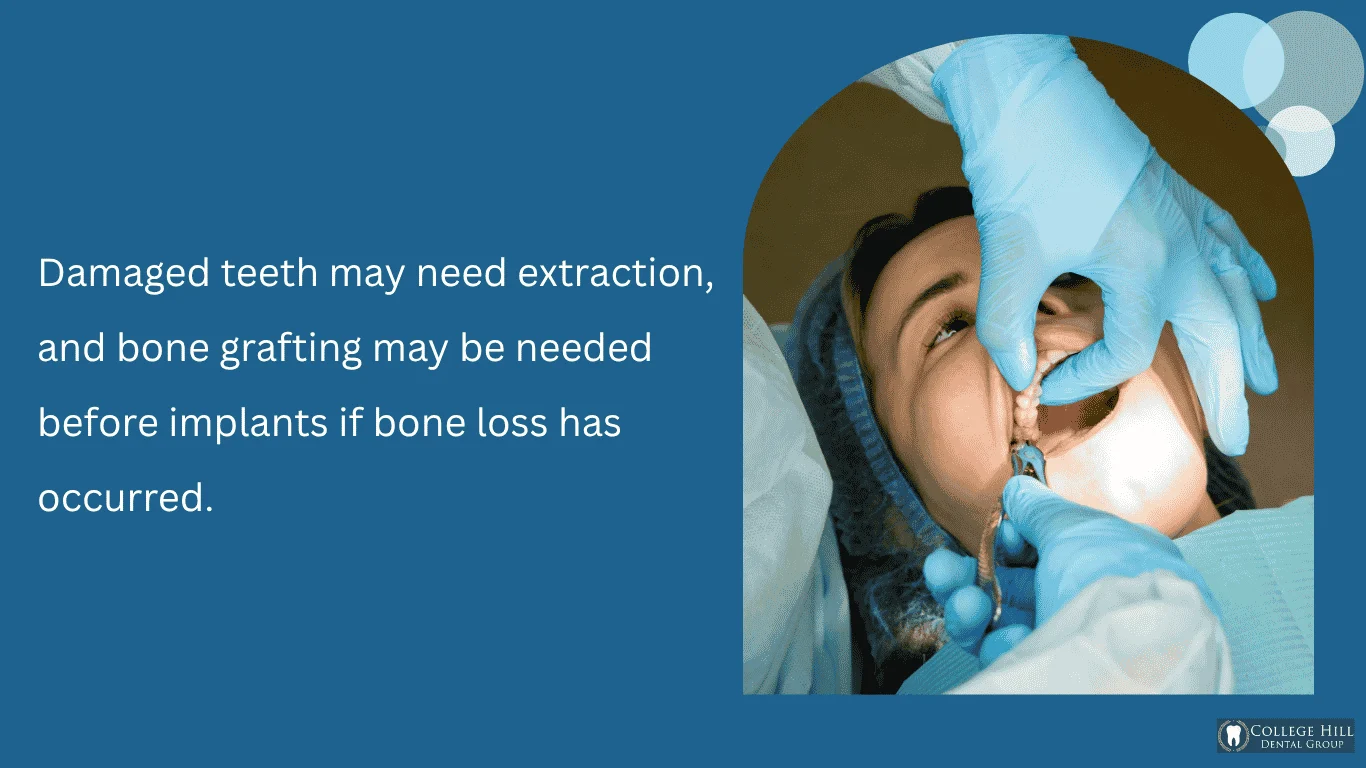
Some teeth can’t be saved and need removal before your smile makeover continues. Infected or severely damaged teeth put neighboring teeth at risk. Your dentist will identify these during examination.
If you need to replace missing teeth with implants, bone grafting may be necessary first. When a tooth is lost, the
Sequencing Smile Makeover Treatments: What Happens First?
The order of treatments in your smile makeover timeline matters more than most people realize.
Starting with whitening sets your baseline shade, orthodontics creates proper alignment before permanent restorations, and surgical work like implants needs healing time before cosmetic finishing touches.
Professional Teeth Whitening and Tooth Preparation
Professional teeth whitening typically comes early in the smile makeover process for an important reason. It establishes the brightest natural shade your teeth can achieve, which helps your dentist match any future veneers or crowns to that color.
Veneers and crowns don’t change color once they’re placed. If you whiten after getting these restorations, your natural teeth will get brighter but your restorations won’t. This creates a mismatched look.
Your dentist will also handle basic tooth preparation during this phase. This includes treating cavities, replacing old fillings, and addressing any decay.
Starting with gum health and fixing broken teeth creates a stable foundation before cosmetic work begins.
The whitening phase usually takes one to three weeks. Some people need only one in-office session, while others prefer take-home trays used over several days.
Orthodontics: Braces and Clear Aligners

Orthodontics often needs to happen before veneers or crowns get placed. Moving your teeth into better positions first can reduce how many veneers you actually need, which means less tooth preparation overall.
Braces or clear aligners like Invisalign straighten crowded teeth, close gaps, and fix bite problems.
This phase takes the longest in your smile makeover timeline, usually three to twelve months depending on how much movement your teeth need.
Straightening teeth before other cosmetic work also helps your final results last longer. When your bite is properly aligned, there’s less stress on restorations like veneers.
This means they’re less likely to chip or crack over time.
Your dentist might recommend retainers after orthodontics to keep teeth in their new positions. Wearing these as directed protects your investment in both the alignment work and any cosmetic treatments that follow.
Implant Placement and Surgical Procedures
Dental implants and other surgical procedures need to happen early because they require significant healing time. An implant is a titanium post placed into your jawbone that acts as an artificial tooth root.
After implant placement, your bone needs to fuse with the implant in a process called osseointegration. This typically takes three to six months. Only after healing is complete can your dentist attach the final crown.
Gum contouring is another surgical step that comes before final cosmetic work. If your gums look uneven or cover too much of your teeth, reshaping them changes the frame of your smile. The gums need two to six weeks to heal and settle into their new shape.
Planning implant work months ahead prevents delays in your overall timeline. Your dentist can often do other treatments during healing periods, like orthodontics or planning for veneers, so the time isn’t wasted.
Cosmetic and Restorative Procedures for Smile Transformation
Combining cosmetic and restorative dentistry creates results that are both beautiful and functional.
These treatments work together to address everything from discolored teeth to missing teeth, giving you a complete transformation.
Porcelain Veneers and Veneers Placement
Porcelain veneers are thin shells of ceramic that bond to the front of your teeth. They can fix chips, stains, gaps, and minor alignment issues all at once.
Your dentist will remove a small amount of enamel from your teeth to make room for the veneers. This step is permanent, so it’s important to understand that veneers are a long-term commitment.
You’ll wear temporary veneers while a master ceramist at a dental lab creates your custom porcelain veneers.
The ceramist matches the color, shape, and texture to give you natural-looking results. This process usually takes two to three weeks.
When your final veneers arrive, your dentist will carefully bond them to your teeth and make any needed adjustments to your bite.
Veneers typically last 10 to 20 years with proper care. They resist stains better than natural teeth, which helps keep your smile bright.
Crowns and Implant Crowns
Crowns cover the entire visible portion of a damaged tooth above the gum line. They restore both strength and appearance when a tooth is heavily decayed, cracked, or worn down.
Implant crowns attach to dental implants that replace missing teeth. The implant itself is a titanium post that acts as an artificial tooth root.
Once the implant heals and fuses with your jawbone, your dentist attaches a custom crown on top.
Both types of crowns are made from porcelain or ceramic materials. The dental lab creates them to match your other teeth perfectly in color and shape.
Your dentist takes detailed impressions or digital scans to ensure a precise fit.
Crowns protect weak teeth from breaking and restore your ability to chew properly. Implant crowns give you back the look and function of a natural tooth.
Cosmetic Bonding and Gum Contouring
Cosmetic bonding uses tooth-colored resin to repair small chips, cracks, or gaps. Your dentist applies the resin directly to your tooth, shapes it, and hardens it with a special light.
This is one of the quickest cosmetic dental procedures, often completed in a single visit.
Bonding works well for minor fixes, though it’s not as durable or stain-resistant as veneers. It typically lasts three to ten years before needing replacement.
Gum contouring reshapes an uneven gum line to improve your smile’s appearance. If your gums cover too much of your teeth or sit at different heights, this procedure creates better balance.
Your dentist uses a laser or surgical tools to carefully remove excess gum tissue.
Both treatments are part of cosmetic dentistry that enhances your smile quickly. They often complement other procedures like veneers or crowns to create a complete transformation.
Final Adjustments, Reveal, and Aftercare
After your comprehensive smile makeover procedures are complete, your dentist will make final adjustments to ensure your smile is picture-perfect.
Proper aftercare and maintenance habits will protect your investment and keep your smile transformation looking its best for years to come.
Refinements for Comfort and Aesthetics

Your dentist will carefully examine your bite and how your teeth fit together during the final adjustments phase. They may need to make small changes to the shape or length of veneers, crowns, or bonding work.
These tweaks ensure your new smile feels natural when you speak and eat. You might need one to three follow-up appointments as your mouth adjusts to the changes.
Common refinements include:
- Adjusting the height of restorations for proper bite alignment
- Smoothing rough edges or contact points
- Fine-tuning the shade or translucency of veneers
- Reshaping teeth for better symmetry
Most patients adapt to their new smile quickly. Any initial sensitivity or difficulty speaking usually goes away within a few days.
Oral Hygiene and Long-Term Maintenance
Your daily oral health routine becomes even more important after a smile makeover. Brush twice daily for two minutes using gentle circular motions.
Floss at least once per day to remove plaque between teeth and around veneers or crowns. Regular dental visits every six months help catch any issues early.
Well-maintained cosmetic dental work can last 15 to 20 years with proper care. Avoid habits that damage your teeth like chewing ice, biting nails, or using your teeth to open packages.
If you grind your teeth at night, wear the custom nightguard your dentist provides. This protects your investment from unnecessary wear.
Recommended Products and Habits
Use non-abrasive toothpaste to clean your teeth without scratching veneers or other restorations. Avoid whitening toothpastes with harsh abrasives that can dull the finish.
Choose a soft-bristled toothbrush and replace it every three months. An electric toothbrush can provide more consistent cleaning with less effort.
Products to protect your smile:
| Product Type | Recommendation |
| Toothpaste | Non-abrasive fluoride formulas |
| Toothbrush | Soft bristles (manual or electric) |
| Mouthwash | Alcohol-free varieties |
| Floss | Waxed or tape-style for restorations |
Limit foods and drinks that stain teeth like coffee, red wine, and dark berries. If you do consume them, rinse your mouth with water afterward.
Smile Makeover Timeline and What to Expect
Most smile makeovers take three to six months from start to finish, though your timeline depends on which treatments you need and how your body heals.
How Long Does a Smile Makeover Take?
A comprehensive smile makeover typically takes three to six months to complete. Simple treatments like teeth whitening can be done in just one or two visits over a few weeks.
More complex cases that include veneers, crowns, or implants need more time.
The timeline from your first consultation to final results usually spans three to five months. This includes time for planning, preparation work, lab fabrication of restorations, and placement appointments.
You’ll also need time between visits for your mouth to heal and adjust.
If you need dental implants, expect a longer timeline. Implants require several months for the posts to fuse with your jawbone before the final teeth can be attached.
Factors That Influence Treatment Duration
Your specific dental needs determine how long your makeover takes. Patients who only need cosmetic work like whitening and bonding finish faster than those who need restorative procedures.
The number of teeth being treated affects your timeline. Working on just your front six teeth takes less time than a full-mouth restoration.
Your oral health also matters. If you need periodontal therapy or tooth extractions first, you’ll add weeks or months to your plan.
Lab turnaround time plays a role too. Custom veneers and crowns typically take two to three weeks to create. Your healing speed between procedures also impacts the overall schedule, as some patients heal faster than others.
Phased vs. Combined Procedures
Your dentist might complete multiple treatments in one visit or spread them across several appointments. Phased treatment means doing one procedure at a time with healing periods between each step. This approach works well for complex cases.
Combined procedures let you get several treatments done during the same appointment. You might get teeth whitening and bonding together, or have multiple veneers placed at once.
The phased approach gives you time to adjust and makes each visit shorter. Combined procedures mean fewer total appointments and a faster finish time.
Your dentist will recommend the best approach based on which treatments you need and your schedule.
Frequently Asked Questions
Most people want to know what happens during their first visit and how long the entire process takes. Understanding the timeline and steps involved helps you feel more prepared for your transformation.
What can I expect at my first smile makeover consultation?
Your first consultation focuses on getting to know you and understanding your goals. The dentist will ask about your health history and what you want to achieve with your smile.
During this visit, you’ll have photographs taken and dental X-rays completed. These X-rays help the dentist check that your teeth are healthy underneath before starting any work.
The dentist needs to know if there are any hidden problems that could affect your treatment.
This appointment is mainly about collecting information. You’ll also get to know your dentist and make sure you both agree on the vision for your new smile.
Is there a common step-by-step process for smile makeovers?
Most smile makeovers follow a similar pattern starting with the consultation. After that, your dentist works with a lab technician to design your specific smile based on your face shape and preferences.
The next step involves creating a digital mockup or physical model of your new teeth. You’ll come back to see and approve this design before any work begins on your actual teeth.
Once you approve the design, the dentist prepares your teeth during a longer appointment. You’ll leave with temporary teeth that protect your natural teeth while the lab creates your final restorations.
This process typically takes three to five months from start to finish.
The final appointment involves removing the temporaries and placing your new teeth. If everything looks perfect, the dentist bonds them permanently in place.
How do I determine the best procedures for my smile makeover?
Your smile makeover dentist will help you choose the right procedures based on your specific needs and goals. During your consultation, you’ll discuss what bothers you most about your current smile.
The dentist will examine your teeth, gums, and bite to see what issues need addressing. Some people only need work on the front six teeth, while others need treatment on ten or more teeth.
Your budget and timeline also play a role in deciding which procedures work best for you. The dentist will create a treatment plan that addresses both cosmetic concerns and any underlying dental health problems.
What are the latest techniques used in smile makeovers?
Modern smile makeovers use digital design technology to create precise previews of your new smile. Dentists can show you exactly how your teeth will look before any work begins.
3D scanning has replaced many traditional impressions, making the process more comfortable. These scans create accurate models that labs use to craft your restorations.
Advanced ceramic materials now allow for stronger, more natural-looking veneers and crowns. The shape and size of teeth can be adjusted to make your smile look younger, more balanced, or more suited to your facial features.
How long is the recovery process after undergoing a smile makeover?
Recovery time depends on which treatments you receive during your makeover. Simple procedures like teeth whitening or bonding require little to no recovery time.
More extensive work involving veneers or crowns may cause some sensitivity for a few days. Your mouth needs time to adjust to the new shape and feel of your teeth.
Most people can return to normal activities right away with temporary teeth in place. You’ll need to be careful about what you eat and avoid biting into hard foods until your final restorations are placed.
Can a smile makeover fix functional as well as cosmetic dental issues?
Yes, smile makeovers can address both how your teeth look and how they work. Your dentist will identify any bite problems or alignment issues during the initial examination.
If you have missing teeth, dental implants can be part of your makeover plan. Crowns can restore damaged teeth while also improving their appearance.
Some people need orthodontic treatment to fix crooked teeth before other cosmetic work can begin. Your dentist will create a treatment plan that solves functional problems first, then focuses on the cosmetic improvements you want.